
Lord Vishnu is one of the most widely worshipped deities in Hinduism. Together with Brahma and Shiva he forms the Trimurti, in which Brahma is associated with creation, Vishnu with preservation and Shiva with dissolution. In the Vaishnava tradition, Vishnu is honoured as the Supreme Being himself. Lord Satyanarayan, whose vrat and katha are the subject of this website, is a benevolent form of Vishnu, so understanding Vishnu helps in understanding the puja.
Who is Lord Vishnu?
Vishnu is known as the preserver and protector of the universe. According to tradition, whenever dharma (righteousness) declines and adharma rises, Vishnu descends to the world in a suitable form to protect the good and restore balance. This idea is famously expressed in the Bhagavad Gita, where Krishna, himself an avatar of Vishnu, promises to appear in every age for this purpose.
Vishnu is called by many names. Narayan is one of the most important; it is traditionally explained as "the one whose abode is the waters" or "the refuge of all beings". He is also called Hari (the one who removes sorrow and sin), Madhava, Keshava, Govinda, Achyuta and Padmanabha. The Vishnu Sahasranama, a hymn recited by countless devotees, lists a thousand of his names. A shorter list for daily worship is the 108 names of Lord Vishnu.
His form and appearance
Vishnu is usually shown with a calm, gentle face and a dark blue or cloud-dark complexion, which devotees see as a sign of his infinite, all-pervading nature, like the sky or the deep ocean. He wears yellow garments (pitambara), a crown, earrings and a garland of forest flowers known as the Vaijayanti mala. On his chest is the Kaustubha jewel and the Shrivatsa mark, which is associated with Goddess Lakshmi.
He is shown with four arms, which stand for his power and presence in every direction. In his hands he holds four symbols:
- Shankha (conch): called Panchajanya. Its sound is associated with the primordial sound of creation and with the call to dharma.
- Chakra (discus): the Sudarshana chakra, which represents the mind and the power to destroy evil and ignorance.
- Gada (mace): called Kaumodaki, a symbol of strength and authority.
- Padma (lotus): a symbol of purity, beauty and spiritual unfolding, as the lotus rises clean from muddy water.
Lord Satyanarayan is shown in the same way, four-armed with conch, discus, mace and lotus, which is one way devotees recognise him as Vishnu himself.
Consort, abode and vehicle
Vishnu's consort is Goddess Lakshmi, the goddess of prosperity, good fortune and grace. Devotees see Lakshmi and Narayan as inseparable, which is why Lakshmi is worshipped together with Satyanarayan and why the aarti of the puja begins "Om Jai Lakshmi Ramana", meaning "Victory to the beloved of Lakshmi".
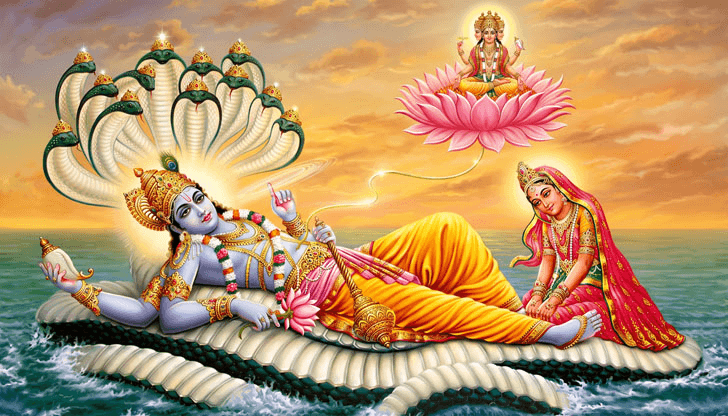
Vishnu's abode is Vaikuntha. He is also often shown resting on the coils of the great serpent Shesha (Ananta) on the ocean of milk (Kshira Sagara), with Lakshmi seated at his feet and Brahma appearing on a lotus that rises from his navel. His vehicle is Garuda, the mighty eagle, who is himself honoured as a great devotee.
The ten avatars of Vishnu
Vishnu is believed to have appeared on earth in many forms. The best known list is the Dashavatara, the ten avatars. The list below follows a common version; some traditions name Balarama in place of the Buddha.
Matsya, the fish
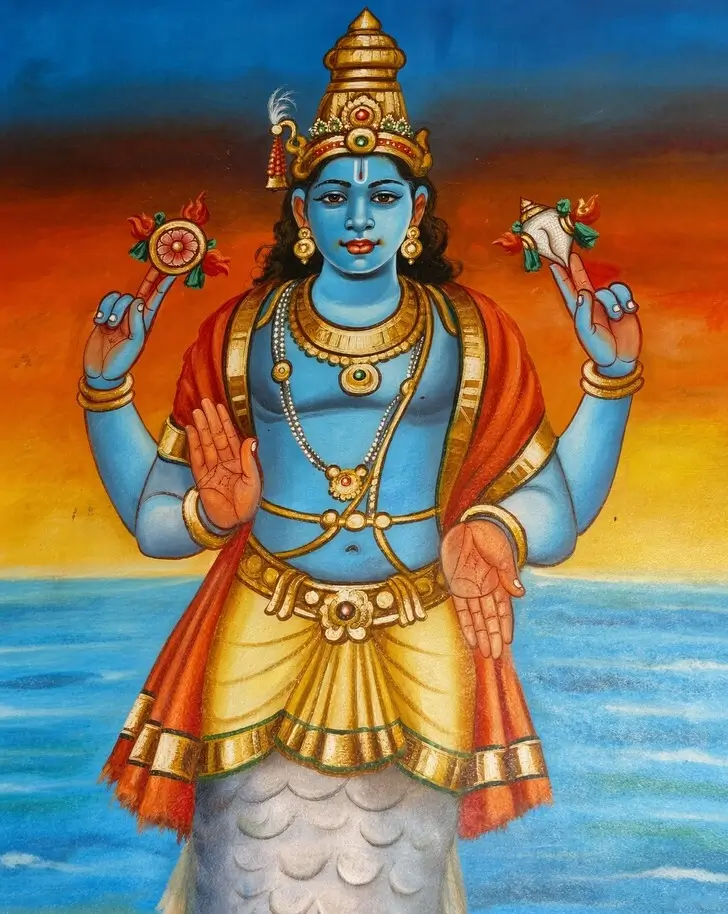 As Matsya, Vishnu saves Manu, the progenitor of humankind, together with the seeds of life and the sacred knowledge of the Vedas, from a great flood by guiding his boat to safety.
Kurma, the tortoise
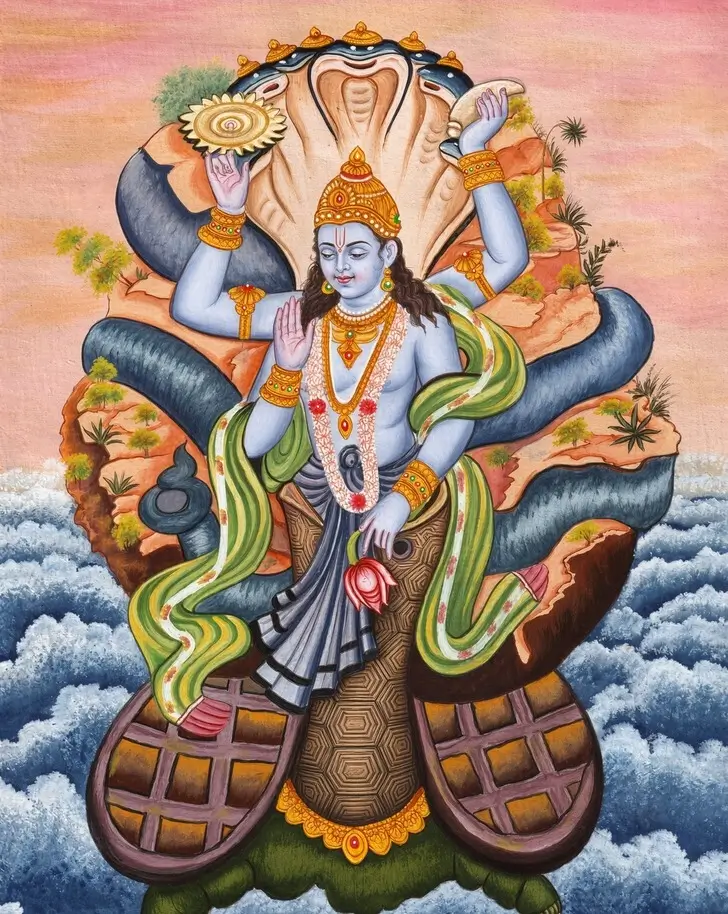 During the churning of the ocean of milk by the gods and the asuras, Vishnu becomes a great tortoise and supports Mount Mandara on his back so the churning can continue. Goddess Lakshmi is among the treasures that emerge from the ocean.
Varaha, the boar
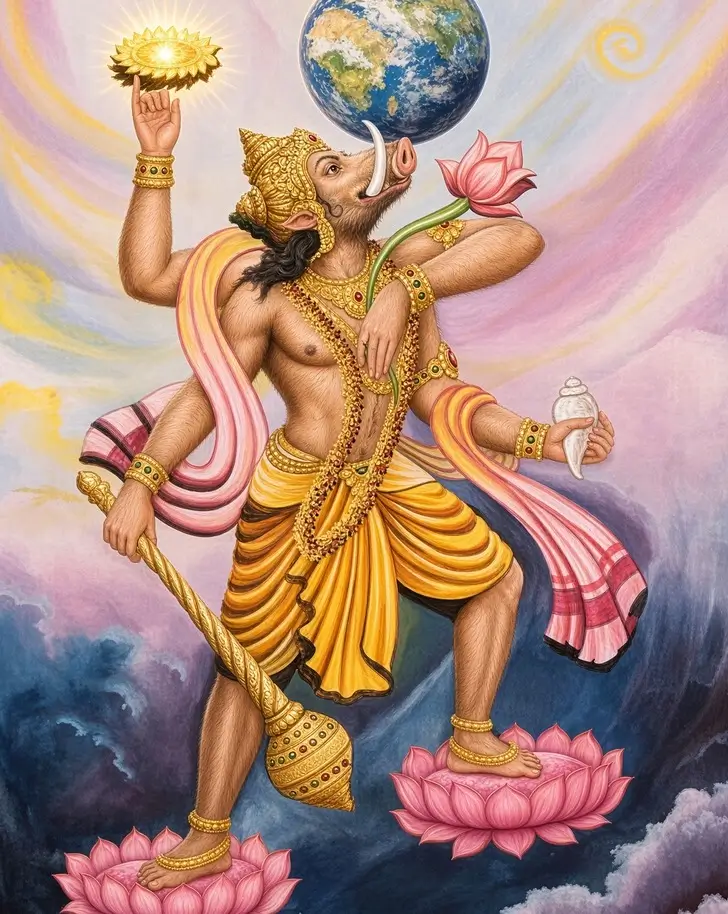 When the demon Hiranyaksha drags the earth to the bottom of the cosmic ocean, Vishnu takes the form of a boar, defeats him and lifts the earth back up on his tusks.
Narasimha, the man-lion
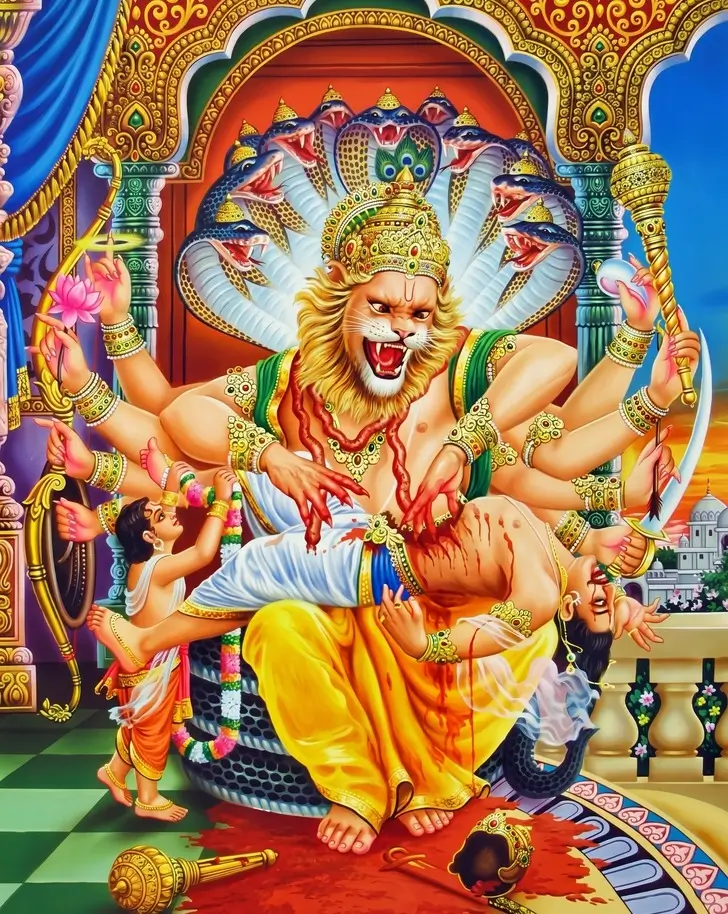 To protect his young devotee Prahlada from his father, the demon king Hiranyakashipu, Vishnu appears as half man and half lion and ends the king's tyranny. The story is a favourite example of the Lord's care for his devotees.
Vamana, the dwarf
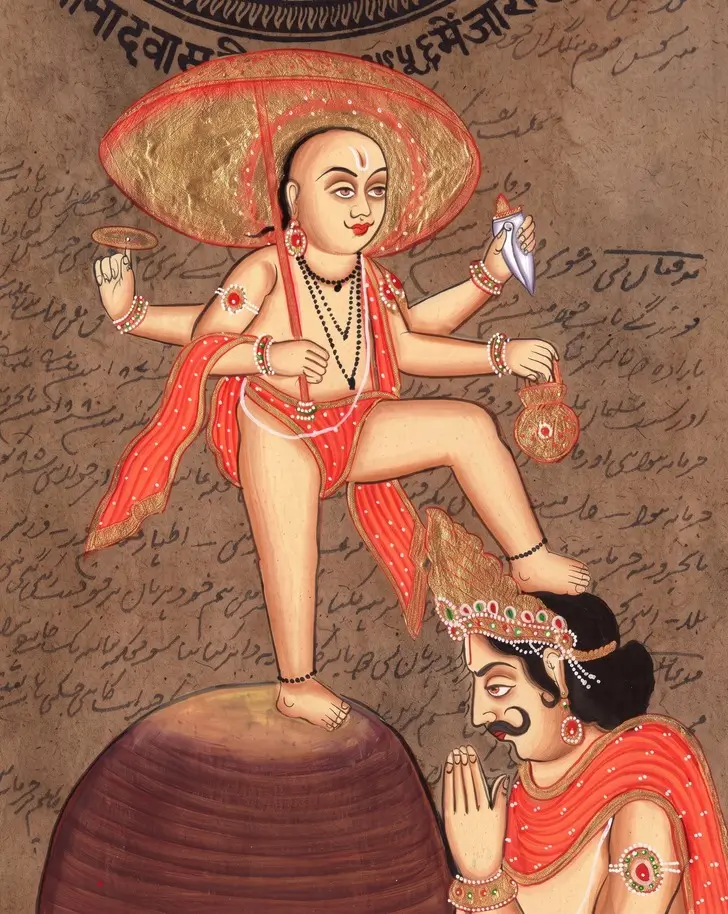 Vishnu comes as a small Brahmin boy to the generous king Bali and asks for as much land as he can cover in three steps. He then grows to cosmic size and covers the earth and the heavens in two steps, and Bali offers his own head for the third step.
Parashurama
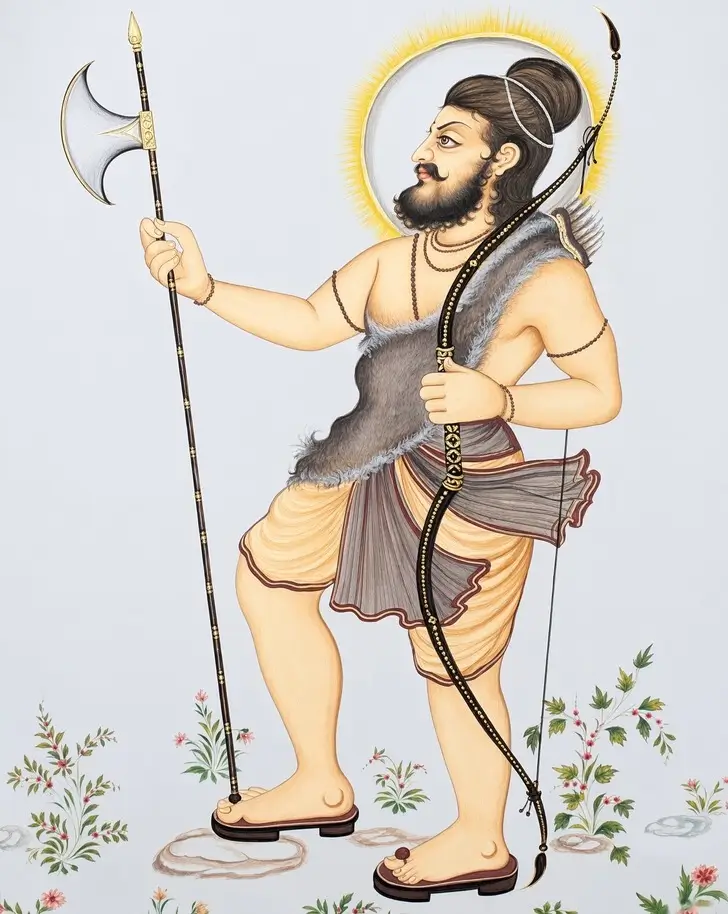 As Parashurama, the warrior sage with an axe, Vishnu humbles kings who have become arrogant and oppressive.
Rama
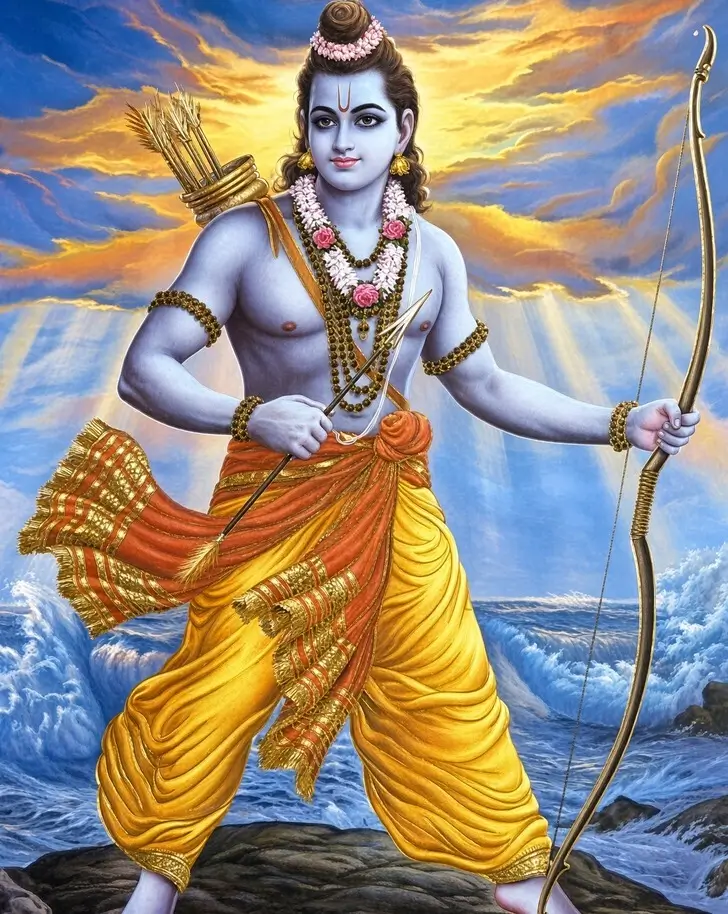 Lord Rama, the prince of Ayodhya and hero of the Ramayana, is honoured as the ideal of truth, duty and righteous conduct. His defeat of Ravana is celebrated at Dussehra, and his return to Ayodhya at Diwali.
Krishna
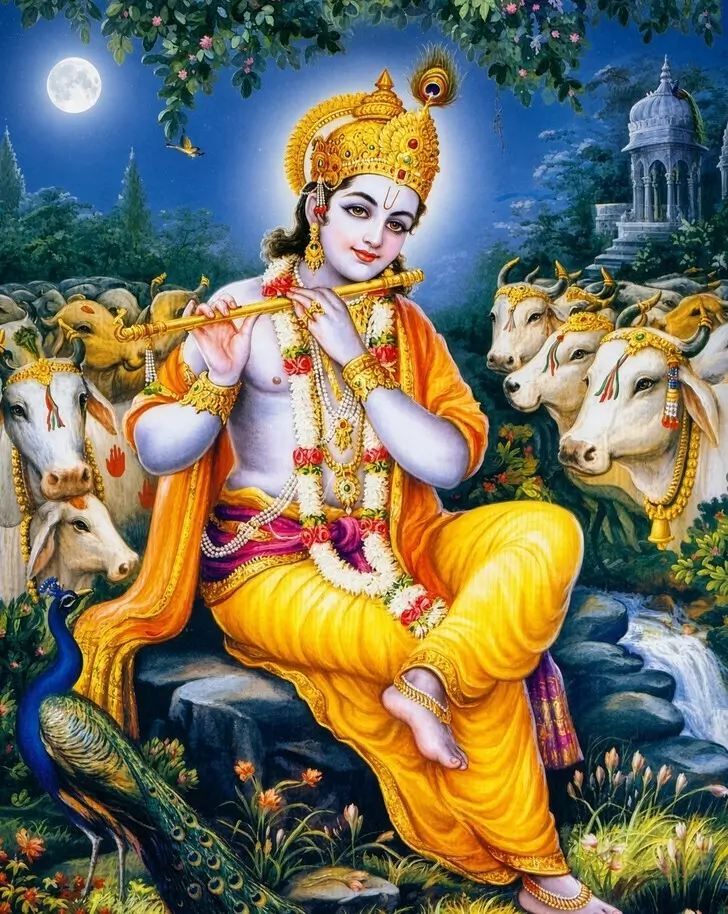 Lord Krishna, born in Mathura and raised in Vrindavan, is loved as the playful child, the divine friend and the teacher of the Bhagavad Gita, which he speaks to Arjuna on the battlefield of Kurukshetra.
Buddha
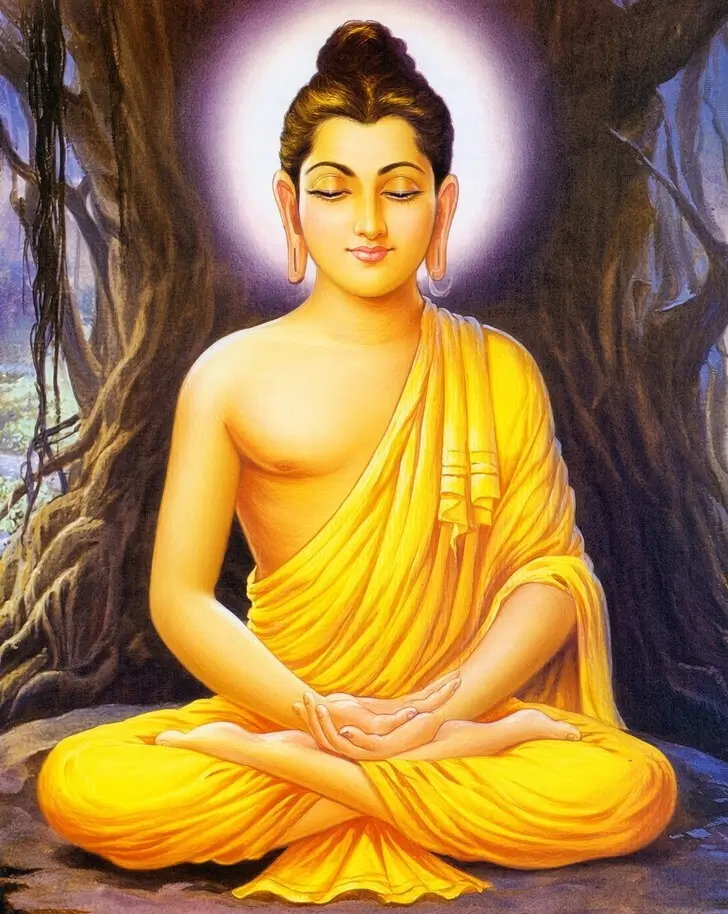 In many lists the Buddha is counted as the ninth avatar, associated with compassion and non-violence. Other traditions place Balarama, Krishna's elder brother, in this position.
Kalki
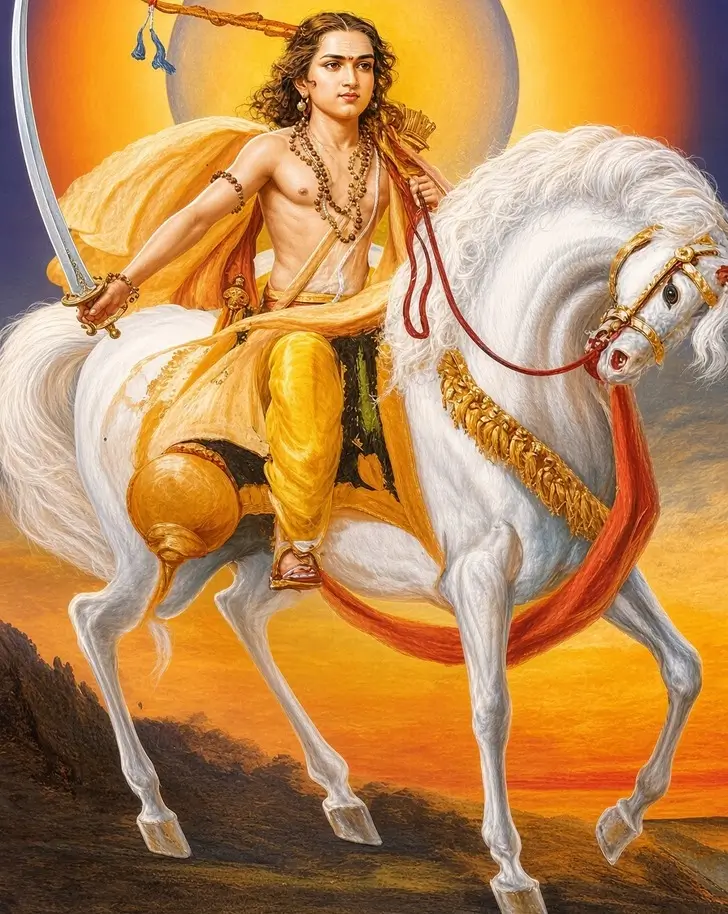 Kalki is the avatar who, according to tradition, is yet to come. He is described riding a white horse with a sword, arriving at the end of the Kali Yuga to destroy evil and begin a new age of truth.
Vishnu and Lord Satyanarayan
The name Satyanarayan joins two words: satya, meaning truth, and Narayan, a name of Vishnu. Satyanarayan is therefore "Narayan who is truth", a gentle and approachable form of Vishnu who blesses those who live truthfully and keep their promises. In the Satyanarayan Katha, it is Lord Vishnu himself who tells Sage Narada about the vrat as a way to relieve the suffering of people on earth.
In the puja, Satyanarayan is worshipped with Goddess Lakshmi, offered tulsi leaves (which are especially dear to Vishnu), and praised in the aarti "Om Jai Lakshmi Ramana". The stories of the katha echo the larger teaching of Vishnu's avatars: the Lord protects the sincere, corrects the proud and restores what is lost when a person turns back to truth. To learn more, read about the significance of Satyanarayan Puja or the words of the Satyanarayan aarti.
भगवान विष्णु हिंदू धर्म में सबसे अधिक पूजे जाने वाले देवताओं में से एक हैं। ब्रह्मा और शिव के साथ वे त्रिमूर्ति में आते हैं, जिसमें ब्रह्मा को सृष्टि, विष्णु को पालन और शिव को संहार से जोड़ा जाता है। वैष्णव परंपरा में विष्णु को स्वयं परब्रह्म माना जाता है। भगवान सत्यनारायण, जिनके व्रत और कथा के बारे में यह वेबसाइट है, विष्णु का ही कृपालु रूप हैं, इसलिए विष्णु को समझने से इस पूजा को समझना आसान हो जाता है।
भगवान विष्णु कौन हैं?
विष्णु को संसार का पालनहार और रक्षक माना जाता है। मान्यता है कि जब-जब धर्म की हानि होती है और अधर्म बढ़ता है, तब-तब विष्णु उपयुक्त रूप लेकर पृथ्वी पर आते हैं, सज्जनों की रक्षा करते हैं और संतुलन लौटाते हैं। यही भाव भगवद्गीता में बड़े प्रसिद्ध ढंग से व्यक्त हुआ है, जहाँ विष्णु के अवतार श्रीकृष्ण हर युग में प्रकट होने का वचन देते हैं।
विष्णु के अनेक नाम हैं। इनमें नारायण सबसे महत्वपूर्ण नामों में से है, जिसका परंपरागत अर्थ "जिनका निवास जल में है" या "सभी प्राणियों का आश्रय" बताया जाता है। उन्हें हरि (दुख और पाप हरने वाले), माधव, केशव, गोविंद, अच्युत और पद्मनाभ भी कहा जाता है। विष्णु सहस्रनाम, जिसका पाठ असंख्य भक्त करते हैं, उनके एक हज़ार नामों का स्तोत्र है। रोज़ की पूजा के लिए छोटी सूची भगवान विष्णु के 108 नाम है।
उनका स्वरूप
विष्णु को प्रायः शांत, सौम्य मुख और नीले या मेघ जैसे श्याम वर्ण के साथ दिखाया जाता है। भक्त इस रंग को आकाश या गहरे सागर की तरह उनके अनंत और सर्वव्यापी होने का प्रतीक मानते हैं। वे पीले वस्त्र (पीतांबर), मुकुट, कुंडल और वनफूलों की वैजयंती माला धारण करते हैं। उनके वक्ष पर कौस्तुभ मणि और श्रीवत्स चिह्न है, जिसे देवी लक्ष्मी से जोड़ा जाता है।
उन्हें चार भुजाओं के साथ दिखाया जाता है, जो हर दिशा में उनकी शक्ति और उपस्थिति का संकेत हैं। उनके हाथों में चार प्रतीक होते हैं:
- शंख: जिसका नाम पांचजन्य है। इसकी ध्वनि को सृष्टि के आदि नाद और धर्म के आह्वान से जोड़ा जाता है।
- चक्र: सुदर्शन चक्र, जो मन का और बुराई तथा अज्ञान को नष्ट करने वाली शक्ति का प्रतीक है।
- गदा: कौमोदकी नाम की गदा, जो बल और अधिकार का प्रतीक है।
- पद्म (कमल): पवित्रता, सौंदर्य और आध्यात्मिक विकास का प्रतीक, क्योंकि कमल कीचड़ में रहकर भी निर्मल खिलता है।
भगवान सत्यनारायण को भी इसी तरह शंख, चक्र, गदा और पद्म धारण किए चतुर्भुज रूप में दिखाया जाता है, जिससे भक्त उन्हें स्वयं विष्णु के रूप में पहचानते हैं।
पत्नी, धाम और वाहन
विष्णु की पत्नी देवी लक्ष्मी हैं, जो समृद्धि, सौभाग्य और कृपा की देवी हैं। भक्त लक्ष्मी और नारायण को एक-दूसरे से अलग नहीं मानते। इसीलिए सत्यनारायण के साथ लक्ष्मी जी की पूजा होती है और पूजा की आरती "ॐ जय लक्ष्मी रमणा" से शुरू होती है, जिसका अर्थ है "लक्ष्मी के प्रिय, आपकी जय हो"।
विष्णु का धाम वैकुंठ है। उन्हें अक्सर क्षीर सागर में शेषनाग (अनंत) की कुंडली पर विश्राम करते दिखाया जाता है, जहाँ लक्ष्मी जी उनके चरणों के पास बैठी हैं और उनकी नाभि से निकले कमल पर ब्रह्मा जी विराजमान हैं। उनका वाहन गरुड़ है, जिसे स्वयं एक महान भक्त के रूप में सम्मान मिलता है।
विष्णु के दस अवतार
मान्यता है कि विष्णु ने अनेक रूपों में पृथ्वी पर अवतार लिया। इनमें सबसे प्रसिद्ध सूची दशावतार यानी दस अवतारों की है। नीचे दी गई सूची प्रचलित रूप पर आधारित है; कुछ परंपराओं में बुद्ध के स्थान पर बलराम का नाम आता है।
मत्स्य अवतार
मत्स्य रूप में विष्णु महाप्रलय के समय मानव जाति के आदि पुरुष मनु की नाव को सुरक्षित पार लगाते हैं और उनके साथ जीवन के बीजों और वेदों के ज्ञान की रक्षा करते हैं।
कूर्म अवतार
देवताओं और असुरों द्वारा समुद्र मंथन के समय विष्णु विशाल कछुए का रूप लेकर मंदराचल को अपनी पीठ पर धारण करते हैं, ताकि मंथन चलता रहे। इसी मंथन से निकले रत्नों में देवी लक्ष्मी भी थीं।
वराह अवतार
जब हिरण्याक्ष नामक दैत्य पृथ्वी को समुद्र के तल में ले जाता है, तब विष्णु वराह रूप लेकर उसे पराजित करते हैं और पृथ्वी को अपने दाँतों पर उठाकर ऊपर ले आते हैं।
नरसिंह अवतार
अपने बाल भक्त प्रह्लाद को उसके पिता, दैत्यराज हिरण्यकशिपु से बचाने के लिए विष्णु आधे मनुष्य और आधे सिंह के रूप में प्रकट होते हैं और उसके अत्याचार का अंत करते हैं। यह कथा भगवान की भक्त-वत्सलता का एक प्रिय उदाहरण है।
वामन अवतार
विष्णु एक छोटे ब्राह्मण बालक के रूप में दानी राजा बलि के पास जाते हैं और तीन पग भूमि माँगते हैं। फिर विराट रूप लेकर दो पगों में पृथ्वी और स्वर्ग नाप लेते हैं, और तीसरे पग के लिए बलि अपना सिर आगे कर देते हैं।
परशुराम अवतार
फरसा धारण करने वाले योद्धा ऋषि परशुराम के रूप में विष्णु उन राजाओं का घमंड तोड़ते हैं जो अहंकारी और अत्याचारी हो गए थे।
राम अवतार
अयोध्या के राजकुमार और रामायण के नायक भगवान राम सत्य, कर्तव्य और मर्यादा के आदर्श माने जाते हैं। रावण पर उनकी विजय दशहरे पर और अयोध्या लौटने की खुशी दीपावली पर मनाई जाती है।
कृष्ण अवतार
मथुरा में जन्मे और वृंदावन में पले भगवान कृष्ण नटखट बालक, सच्चे सखा और भगवद्गीता के उपदेशक के रूप में पूजे जाते हैं। गीता का उपदेश उन्होंने कुरुक्षेत्र के युद्धक्षेत्र में अर्जुन को दिया था।
बुद्ध अवतार
कई सूचियों में बुद्ध को नौवाँ अवतार माना जाता है, जिन्हें करुणा और अहिंसा से जोड़ा जाता है। कुछ परंपराओं में इस स्थान पर कृष्ण के बड़े भाई बलराम का नाम आता है।
कल्कि अवतार
मान्यता के अनुसार कल्कि अवतार अभी होना है। उनका वर्णन सफेद घोड़े पर सवार और हाथ में तलवार लिए हुए मिलता है। माना जाता है कि वे कलियुग के अंत में आकर बुराई का नाश करेंगे और सत्य के नए युग की शुरुआत करेंगे।
विष्णु और भगवान सत्यनारायण
सत्यनारायण नाम दो शब्दों से बना है: सत्य और नारायण, जो विष्णु का नाम है। यानी सत्यनारायण "सत्य स्वरूप नारायण" हैं, विष्णु का ऐसा सौम्य और सुलभ रूप जो सत्य पर चलने वालों और अपना वचन निभाने वालों पर कृपा करता है। सत्यनारायण कथा में स्वयं भगवान विष्णु नारद मुनि को पृथ्वी के लोगों का दुख दूर करने के उपाय के रूप में यह व्रत बताते हैं।
पूजा में सत्यनारायण की आराधना लक्ष्मी जी के साथ होती है, उन्हें तुलसी दल अर्पित किए जाते हैं (जो विष्णु को विशेष प्रिय हैं) और "ॐ जय लक्ष्मी रमणा" आरती से उनकी स्तुति की जाती है। कथा की कहानियाँ भी विष्णु के अवतारों की बड़ी सीख को दोहराती हैं: भगवान सच्चे भक्तों की रक्षा करते हैं, अहंकारी को सुधारते हैं और जब मनुष्य सत्य की ओर लौटता है तो खोया हुआ लौटा देते हैं। अधिक जानने के लिए सत्यनारायण पूजा का महत्व या सत्यनारायण आरती पढ़ें।