

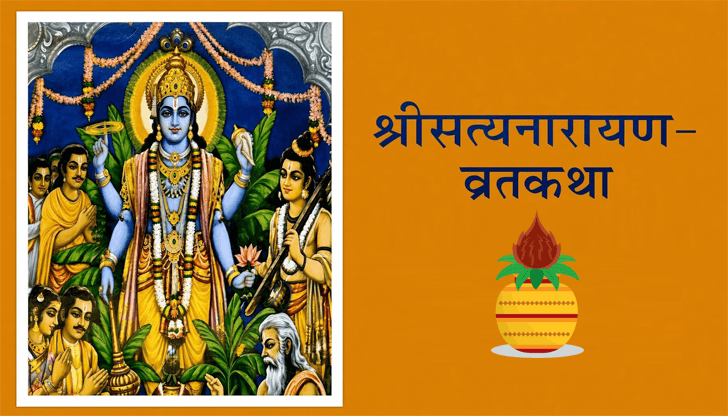
Download the Satyanarayan Vrat Katha PDF (with puja vidhi, samagri and aarti)
The Satyanarayan Vrat Katha is the sacred story read or heard during every Satyanarayan Puja. According to tradition it comes from the Reva Khanda of the Skanda Purana, although some scholars note that it is a later addition found only in certain manuscripts. The story is narrated by Suta (Sutji) to the sages led by Shaunaka at the holy forest of Naimisharanya, and it is divided into five chapters (adhyaya).
The katha is read after the main worship and before the aarti, usually by the family priest or an elder, while everyone sits and listens with folded hands. Many families hold it on Purnima, Sankranti or on happy occasions such as a housewarming, a wedding or a new beginning. Below is the full story in clear English, chapter by chapter.
Chapter 1: Narada's question
Sage Vyasa said: Once, at Naimisharanya, the sages led by Shaunaka asked Suta, who knew all the Puranas: "Great sage, by which vow or austerity can a person obtain the fruit they long for? We all wish to hear it; please tell us." Suta replied that the same question had once been asked by the divine sage Narada, and he would repeat the answer that Lord Vishnu, the husband of Lakshmi, had given. "Listen carefully," he said.
Narada, who travels through all the worlds for the good of others, once came to the earth (Mrityulok). There he saw people born into many kinds of lives, each suffering pain and sorrow as a result of their own actions. Wondering by what means their suffering could surely be ended, he went to Vishnulok, the abode of Lord Vishnu. There he saw the Lord, radiant and four-armed, holding the conch, discus, mace and lotus and wearing a garland of forest flowers, and he began to praise him as the Lord beyond speech and mind, of infinite power, without beginning, middle or end, beyond all qualities yet full of every auspicious quality, the cause of all creation and the remover of his devotees' pain.
Pleased, Lord Vishnu said: "Fortunate one, why have you come here? Tell me what is in your mind, and I will explain everything." Narada said: "Lord, the people of the earth, born into many lives because of their sinful deeds, are suffering in many ways. If you are kind to me, please tell me a simple means by which their troubles can be removed."
The Lord said: "Dear child, you have asked a fine question out of kindness for the world. Listen, and I will tell you of the vow that frees a person from delusion. There is a sacred and very meritorious vow of Lord Satyanarayan, rare both in heaven and on earth. Out of affection for you I will describe it now. Whoever performs the Satyanarayan vrat properly soon finds happiness in this life and liberation (moksha) hereafter." Narada then asked what its fruit was, how it should be done, who had done it before, and when it should be performed.
The Lord said: "This Satyanarayan vrat removes sorrow and grief, increases wealth and grain, and brings good fortune, children and success everywhere. It may be done on any day, with faith and devotion, in the company of Brahmins and relatives, preferably in the evening. For the offering (naivedya), take ripe bananas, ghee, milk, wheat flour (or rice flour if wheat is not available), and sugar or jaggery in a 'sava' (one and a quarter) measure, mix them together and offer them to the Lord with devotion.
"After listening to the katha with family and friends," the Lord continued, "one should give dakshina to the Brahmins and then feed them along with the relatives. Take the prasad with devotion, sing bhajans and kirtan, and go home remembering Lord Satyanarayan. Whoever does this surely has their wish fulfilled. Especially in the Kali Yuga, this is the simplest way on earth."
Here ends the first chapter of the Shri Satyanarayan Vrat Katha from the Reva Khanda of the Skanda Purana.
Chapter 2: The poor Brahmin and the woodcutter
Suta said: "O Brahmins, now I will tell you who first performed this vow." In the beautiful city of Kashi lived a very poor Brahmin named Shatanand. Tormented by hunger and thirst, he wandered every day begging for alms. The Lord, who is ever kind to Brahmins, saw his distress, took the form of an old Brahmin and asked him respectfully: "Why do you wander the earth so sadly every day? Tell me everything, best of Brahmins; I wish to hear it."
The Brahmin said: "Lord, I am a very poor Brahmin and roam the earth only to beg. If you know a way to end my poverty, please tell me." The old Brahmin said: "Lord Satyanarayan, who is Vishnu himself, grants what is desired. Perform his excellent vrat, which frees people from every sorrow." He explained the whole method and then vanished on the spot.
That night the Brahmin could not sleep, thinking: "I will perform this vrat exactly as the old Brahmin told me." The next morning he resolved, "Today I will perform the Satyanarayan vrat," and set out for alms. That day he received a great deal, and with it he performed the vrat together with his relatives. By its power he was freed from all his troubles and became prosperous. From then on he performed the vrat every month, was freed from all sins, and in the end attained liberation, which is hard to win.
Suta said: "Whoever on earth performs the Shri Satyanarayan vrat will be freed from every sorrow. I have told you what Lord Narayan told Narada. What more shall I say?"
The sages asked: "O sage, who else on earth performed this vow after hearing of it from that Brahmin? We wish to hear it all, for our faith in this vow is growing." Suta said: Listen, sages, to who performed it. One day, while the Brahmin was performing the vrat with his family and relatives as well as he could afford, a woodcutter came by. He put down his bundle of wood outside and, tormented by thirst, came to the Brahmin's house. Seeing the worship, he bowed and asked: "What are you doing, and what fruit does it give? Please tell me in full."
The Brahmin said: "This is the Satyanarayan vrat, which fulfils every wish. All the wealth and grain I have came through its blessing." The woodcutter drank water, took the prasad and went on towards the town, thinking: "With whatever I earn from selling wood today, I will perform this excellent vrat of Lord Satyanarayan." Carrying the wood on his head, he went to the part of the town where wealthy people lived, and that day he received twice the usual price.
Joyfully he came home with ripe bananas, sugar, ghee, milk and wheat flour in the sava measure. He called his relatives and performed the vrat of Lord Satyanarayan with full ceremony. Through its power he was blessed with wealth and sons, enjoyed many joys in this world, and at the end of his life went to Satyapur, the abode of the Lord (Vaikuntha).
Here ends the second chapter of the Shri Satyanarayan Vrat Katha from the Reva Khanda of the Skanda Purana.
Chapter 3: King Ulkamukh and the merchant Sadhu
Suta said: Listen, great sages, to the next part of the story. Long ago there lived a king named Ulkamukh, self-controlled, truthful and very wise. He visited the temple every day and pleased the Brahmins with gifts. His lotus-faced queen was virtuous, modest, beautiful and devoted to him. One day the king and queen were performing the Satyanarayan vrat on the bank of the river Bhadrashila.
At that moment a merchant (vaishya) named Sadhu arrived there with much wealth and goods for trade. He tied up his boat on the riverbank, came to the king and, seeing him engaged in the vow, humbly asked: "King, what are you doing with such devotion? Please tell me; I wish to hear." The king said: "Sadhu, I am performing the vow and worship of Lord Vishnu of matchless splendour with my relatives, praying for sons and other blessings."
Sadhu said respectfully: "King, explain the whole method to me, and I will perform this vow and worship as you describe. I too have no children." Sure that the vow would bring him a child, he finished his trade and went home happily. There he told his wife Lilavati all about this vow of truth that grants children, saying: "When we are blessed with a child, I will perform this vrat."
In time, by the grace of Lord Satyanarayan, his virtuous wife Lilavati conceived, and in the tenth month she gave birth to a beautiful daughter, who grew day by day like the waxing moon. They named her Kalavati. One day Lilavati gently reminded her husband: "Why do you not now perform the Satyanarayan vrat that you vowed earlier?"
Sadhu said: "Dear one, I will perform it at her wedding," and, having reassured his wife, went off to the city on business. Kalavati grew up in her father's house. When Sadhu saw that his daughter, playing with her friends, had reached marriageable age, he told a messenger: "Find a worthy groom for her." The messenger went to the city of Kanchan and brought back the son of a merchant there. Seeing that the young man was handsome and virtuous, Sadhu happily gave his daughter to him in marriage with full ceremony, in the presence of his community and relatives.
But, as ill luck would have it, Sadhu forgot the vow once again, and he did not perform it at the wedding as he had promised. The Lord was displeased. Some time later Sadhu, skilled in trade, took his son-in-law on a trading journey to Ratnasarapur, a fine city near the sea, ruled by King Chandraketu. Seeing that the merchant had broken his promise, Lord Satyanarayan pronounced a curse: he would suffer harsh and heavy hardship.
One day a thief stole wealth from King Chandraketu and came to the very place where the two merchants were staying. Seeing the king's men running after him, he took fright, left the stolen wealth there and ran away. The king's men arrived, found the king's wealth beside Sadhu, bound the two merchants and led them away. They told the king happily: "Lord, we have caught two thieves; give your command." Without any enquiry the king had them bound in heavy chains and thrown into prison. Through the Lord's maya no one listened to their pleas, and King Chandraketu also seized all their wealth.
Because of the curse, misfortune struck at home too. Thieves stole all the wealth in the house, and Lilavati, suffering in body and mind and tormented by hunger and thirst, wandered from door to door for food. Kalavati too went about every day in search of something to eat. One day the hungry Kalavati came to a Brahmin's house where the Satyanarayan vrat and puja were being performed. She sat and listened to the katha, asked the Lord for a boon, took the prasad and returned home late at night.
Her mother asked her lovingly: "Daughter, where were you until so late? What is on your mind?" Kalavati said at once: "Mother, at a Brahmin's house I saw a vow being performed that fulfils every wish." Hearing this, Lilavati prepared to perform the vrat. With a glad heart that virtuous woman worshipped Lord Satyanarayan with her relatives and prayed: "Lord, forgive the fault of my husband and son-in-law, and let them both come home soon."
Lord Satyanarayan was pleased once more. He appeared to King Chandraketu in a dream and said: "Best of kings, in the morning free the two merchants and return all the wealth you took from them, or I will destroy your kingdom, wealth and sons, everything you have." Saying this, the Lord vanished.
In the morning the king told his court of the dream and ordered: "Release the two imprisoned merchants at once." The officers brought them before the king and said humbly: "Maharaj, the two merchants have been freed from their chains and brought here." The two merchants bowed to King Chandraketu and, remembering what had happened, trembled with fear and could not speak.
The king spoke to them respectfully: "Fate brought you this great suffering, but now you have nothing to fear." He had them shaved and groomed, gave them clothes and ornaments, and cheered them with kind words. He returned twice the wealth he had taken and said: "Sadhu, now go home." Bowing to the king, the two merchants said, "By your grace we go," and set out for home.
Here ends the third chapter of the Shri Satyanarayan Vrat Katha from the Reva Khanda of the Skanda Purana.
Chapter 4: The boat of creepers and Kalavati's prasad
Suta said: The merchant Sadhu performed auspicious rites, gave gifts to Brahmins and began the journey home by boat. When he had gone some distance, Lord Satyanarayan decided to test his truthfulness. Taking the form of a wandering ascetic with a staff (dandi sannyasi), he asked: "Sadhu, what is in your boat?" Drunk with pride in his wealth, Sadhu laughed scornfully and said: "Why do you ask, ascetic? Do you want some of our money? There is nothing in our boat but creepers and leaves." Hearing these harsh words, the Lord said, "So be it: may your words come true," and went and sat a little way off by the shore.
When the ascetic had gone, Sadhu finished his daily rites and returned to his boat. He was amazed to see it riding high in the water, and when he found it filled with nothing but creepers and leaves, he fainted with shock. When he came round he was full of worry. Then his son-in-law said: "Why do you grieve? This is the ascetic's curse. He can undo it if he wishes, without doubt. So let us take refuge in him; there our wish will be granted."
Sadhu went to the ascetic, bowed before him with devotion and said respectfully: "Forgive me for the sin of telling you a lie." Saying this, he bowed again and again, overcome with grief. Seeing him weep, the ascetic said: "Foolish man, do not cry, but listen. You have suffered again and again because you turned away from my worship." Hearing this, Sadhu began to praise him. Sadhu said: "Lord, even Brahma and the gods, deluded by your maya, cannot truly know your qualities and forms; how could a foolish man like me, deluded by the same maya, know you? Be pleased with me. I will worship you as well as I am able. I have come to you for refuge. Protect me and the wealth that was in my boat."
Hearing his devoted words, the Lord was satisfied, granted his wish and vanished on the spot. Sadhu climbed into the boat, found it full of wealth once more and said: "By the grace of Lord Satyadev our wish has come true." He worshipped the Lord there with his companions and, rejoicing in Lord Satyanarayan's grace, steered the boat carefully towards home. As his city came near, he said to his son-in-law: "Look, there is my city, Ratnapuri." Then he sent a messenger ahead to announce his return.
The messenger reached the house, bowed with folded hands to Lilavati and gave her the good news: "The master has arrived near the city with his son-in-law, relatives and great wealth." Lilavati was overjoyed. She was performing the Satyanarayan puja at that moment; she finished it and told her daughter: "I am going to see your father; come soon." Hearing her mother, Kalavati finished the vow but, in her eagerness to see her husband, ran off without taking the prasad. Lord Satyanarayan was displeased at this disrespect, and he sank her husband in the water together with the boat and all the wealth.
When Kalavati could not see her husband, she fell to the ground weeping. Seeing the boat gone and his daughter in such grief, Sadhu was frightened and wondered: "What strange thing has happened?" The boatmen too were full of worry. Lilavati, distraught at her daughter's state, lamented to her husband: "How has he vanished with the boat just now? Who knows which god's displeasure has taken the boat away? Who can know the greatness of Shri Satyanarayan?" Weeping with her family, she took Kalavati in her arms.
Grieving for her lost husband, Kalavati took his sandals and resolved to give up her life and follow him. Seeing their daughter in this state, the righteous Sadhu and his wife sank deep into sorrow. Sadhu thought: "Either Lord Satyanarayan has done this, or we are all deluded by his maya. I will worship Lord Satyanarayan as well as my means allow." He called everyone together, told them his resolve and bowed down before Lord Satyadev again and again. The Lord, protector of the humble and loving to his devotees, was pleased, and a voice came from the sky: "Your daughter left the prasad and came running to see her husband. That is why he has vanished. If she goes home, takes the prasad and returns, she will surely find her husband again, Sadhu; there is no doubt."
Hearing the heavenly voice, Kalavati hurried home and respectfully took the prasad. When she came back, she saw her husband and her family before her. Then she said to her father: "Now let us go home; why delay?" Content, Sadhu worshipped Lord Satyanarayan with full ceremony and went home with his wealth and relatives. From then on he performed the puja of Lord Satyanarayan on every Purnima and Sankranti, enjoyed happiness in this world, and at the end of his life reached Satyapur, the abode of the Lord.
Here ends the fourth chapter of the Shri Satyanarayan Vrat Katha from the Reva Khanda of the Skanda Purana.
Chapter 5: King Tungadhvaj and the cowherds
Suta said: Listen, great sages, to one more story. There was once a king named Tungadhvaj, devoted to caring for his people, who brought suffering upon himself by disregarding the prasad of Lord Satyadev. One day, after hunting in the forest, he came to rest beneath a banyan tree. There he saw cowherds (gopas) happily worshipping Lord Satyadev with devotion, together with their relatives.
Out of pride, the king neither went to them nor bowed to Lord Satyanarayan. When the worship ended, the cowherds placed some of the Lord's prasad near the king and went back to share the rest among themselves. The king did not even touch it, and for this disrespect to the prasad he had to suffer greatly.
All his wealth and grain were lost, and his hundred sons died. The king resolved: "Surely Lord Satyanarayan has brought this ruin upon me. I must go to the place where the Satyanarayan puja was being performed." He went to the cowherds and, together with them, worshipped Lord Satyadev with faith and devotion according to the proper rites. By the Lord's grace he regained his wealth and sons, enjoyed every happiness in this world, and at the end reached Satyapur.
Suta said: Whoever performs this most rare Shri Satyanarayan vrat and listens with devotion to the Lord's holy, fruitful story is believed to receive wealth, grain and other blessings by his grace. Tradition says that the poor become wealthy, the bound are set free and the fearful become fearless, and that such a person enjoys the happiness they desire in this world and at the end goes to Satyapur. "O Brahmins," Suta said, "thus I have told you the vrat of Lord Satyanarayan, by which a person is freed from all sorrow."
In the Kali Yuga, worship of Lord Satyadev is said to bear special fruit. People will call the same Lord Vishnu by many names: some Kaal, some Satya, some Ish, some Satyadev and others Satyanarayan. Taking many forms, Lord Satyanarayan fulfils the wishes of all. Whoever reads or hears this vrat katha is believed to be freed of their sins by the Lord's grace.
Suta then told of the later births of those who had kept the vow, as remembered in tradition. Shatanand, the wise Brahmin, was reborn as Sudama and, meditating on Lord Krishna, attained liberation. The woodcutter became Guha, king of the Nishadas, who served Lord Rama and attained liberation. King Ulkamukh became King Dasharatha, who worshipped Lord Ranganath and reached Vaikuntha. The righteous, truthful merchant Sadhu became King Mayuradhvaj (Mordhwaj), who cut his own son in two with a saw and offered half the body to Lord Vishnu, and attained liberation. King Tungadhvaj became Swayambhuva Manu, who carried out all the work of the Lord and reached Vaikuntha. The cowherds were reborn as the gopas of Vraj and reached Goloka, the eternal abode of the Lord.
Here ends the fifth chapter of the Shri Satyanarayan Vrat Katha from the Reva Khanda of the Skanda Purana.
The message of the katha
Each chapter carries a simple lesson. The Brahmin and the woodcutter show that sincere faith matters more than wealth: both began with very little. The merchant Sadhu shows the cost of postponing a promise and of telling a lie, and his repentance shows that the Lord forgives a truly humble heart. Kalavati and King Tungadhvaj remind devotees that prasad is a sign of divine grace and should always be received with respect, however busy or proud one may be.
Above all, the katha teaches that Satya, truth, is itself a form of God. Speaking truthfully, keeping one's vows and honouring what is sacred are the real heart of the puja. After the katha, the family sings the Satyanarayan aarti and shares the prasad with everyone present. For the full order of worship, see the Satyanarayan puja vidhi.
Download the Satyanarayan Vrat Katha PDF (with puja vidhi, samagri and aarti)
सत्यनारायण व्रत कथा PDF डाउनलोड करें (पूजा विधि, सामग्री और आरती सहित)
श्री सत्यनारायण व्रत कथा वह पवित्र कथा है जो हर सत्यनारायण पूजा में पढ़ी या सुनी जाती है। परंपरा के अनुसार यह स्कंद पुराण के रेवा खंड से ली गई मानी जाती है, यद्यपि कुछ विद्वान इसे बाद में जोड़ा गया अंश मानते हैं जो केवल कुछ पांडुलिपियों में मिलता है। यह कथा नैमिषारण्य में श्री सूतजी ने शौनक आदि ऋषियों को सुनाई थी और इसके पांच अध्याय हैं।
मुख्य पूजन के बाद और आरती से पहले पुरोहित या घर के कोई बड़े-बुजुर्ग कथा पढ़ते हैं और सभी लोग हाथ जोड़कर श्रद्धा से सुनते हैं। बहुत से परिवार पूर्णिमा, संक्रांति या गृहप्रवेश, विवाह जैसे शुभ अवसरों पर यह कथा करवाते हैं। नीचे पांचों अध्यायों की पूरी कथा क्रम से दी गई है।
पहला अध्याय: नारदजी का प्रश्न
श्री व्यासजी ने कहा: एक समय नैमिषारण्य तीर्थ में शौनक आदि सभी ऋषियों और मुनियों ने पुराणों के ज्ञाता श्री सूतजी महाराज से पूछा: "हे महामुने! किस व्रत अथवा तपस्या से मनोवांछित फल प्राप्त होता है? हम सब उसे सुनना चाहते हैं, कृपा करके कहिए।"
श्री सूतजी बोले: इसी प्रकार देवर्षि नारदजी के पूछने पर भगवान कमलापति ने उनसे जो कहा था, वही मैं आपसे कहता हूं, आप लोग ध्यान से सुनें। एक समय योगी नारदजी लोगों के कल्याण की कामना से अनेक लोकों में भ्रमण करते हुए मृत्युलोक में आए। यहां उन्होंने देखा कि अपने-अपने कर्मों के फल से अनेक योनियों में जन्मे सभी प्राणी तरह-तरह के कष्ट भोग रहे हैं। "किस उपाय से इनके दुखों का निश्चित रूप से नाश हो सकता है", मन में ऐसा विचार करके वे विष्णुलोक गए। वहां शंख, चक्र, गदा, पद्म और वनमाला से सुशोभित चार भुजाओं वाले भगवान श्री नारायण के दर्शन करके वे उनकी स्तुति करने लगे।
नारदजी बोले: हे वाणी और मन से परे स्वरूप वाले, अनंत शक्ति से संपन्न, आदि, मध्य और अंत से रहित, निर्गुण होकर भी सभी कल्याणकारी गुणों से युक्त, संपूर्ण सृष्टि के कारण और भक्तों की पीड़ा हरने वाले परमात्मा! आपको नमस्कार है।
स्तुति सुनकर भगवान श्री विष्णु ने नारदजी से कहा: "महाभाग! आप किस प्रयोजन से यहां आए हैं? आपके मन में जो कुछ है, कहिए। मैं आपको सब कुछ बताऊंगा।" नारदजी बोले: "भगवन! मृत्युलोक में अपने पापकर्मों के कारण अनेक योनियों में जन्मे सभी लोग बहुत प्रकार के क्लेशों से दुखी हैं। हे नाथ! यदि मुझ पर आपकी कृपा हो तो बताइए कि किस सरल उपाय से उनके कष्ट दूर हो सकते हैं।"
श्री भगवान ने कहा: "हे वत्स! संसार पर कृपा करने की इच्छा से आपने बहुत अच्छी बात पूछी है। जिस व्रत को करने से प्राणी मोह से मुक्त हो जाता है, वह मैं आपको बताता हूं, सुनिए। स्वर्ग और मृत्युलोक दोनों में दुर्लभ, भगवान सत्यनारायण का एक महान पुण्यदायी व्रत है। आपके स्नेह के कारण मैं इसे इस समय कह रहा हूं। विधि-विधान से सत्यनारायण व्रत करके मनुष्य इस लोक में शीघ्र सुख पाता है और परलोक में मोक्ष प्राप्त करता है।" भगवान की यह वाणी सुनकर नारद मुनि ने पूछा: "प्रभो! इस व्रत का फल क्या है? इसका विधान क्या है? यह व्रत पहले किसने किया और इसे कब करना चाहिए? यह सब विस्तार से बताइए।"
श्री भगवान ने कहा: "यह सत्यनारायण व्रत दुख और शोक को दूर करने वाला, धन-धान्य बढ़ाने वाला, सौभाग्य और संतान देने वाला तथा सब जगह विजय दिलाने वाला है। किसी भी दिन भक्ति और श्रद्धा के साथ, ब्राह्मणों और बंधु-बांधवों को साथ लेकर, धर्मपूर्वक संध्या के समय भगवान सत्यनारायण की पूजा करनी चाहिए। नैवेद्य के लिए पके केले, घी, दूध, गेहूं का आटा (गेहूं न हो तो साठी चावल का आटा) और शक्कर या गुड़ लें। यह सारी सामग्री सवाया मात्रा में मिलाकर भक्ति से भगवान को निवेदित करनी चाहिए।"
"बंधु-बांधवों के साथ श्री सत्यनारायण भगवान की कथा सुनकर ब्राह्मणों को दक्षिणा देनी चाहिए और फिर बंधु-बांधवों सहित ब्राह्मणों को भोजन कराना चाहिए। भक्ति से प्रसाद ग्रहण करके भजन-कीर्तन करना चाहिए और फिर भगवान सत्यनारायण का स्मरण करते हुए अपने घर जाना चाहिए। ऐसा करने से मनुष्य की अभिलाषा अवश्य पूर्ण होती है। विशेष रूप से कलियुग में पृथ्वी पर यही सबसे सरल उपाय है।"
इति श्री स्कंद पुराण के रेवा खंड की श्री सत्यनारायण व्रत कथा का पहला अध्याय संपूर्ण।
दूसरा अध्याय: निर्धन ब्राह्मण और लकड़हारा
श्री सूतजी बोले: हे द्विजो! अब मैं बताता हूं कि पहले इस व्रत को किसने किया था। सुंदर काशी नगरी में शतानन्द नाम का एक अत्यंत निर्धन ब्राह्मण रहता था। भूख और प्यास से व्याकुल होकर वह प्रतिदिन भिक्षा के लिए भटकता रहता था। ब्राह्मणों से प्रेम करने वाले भगवान ने उस दुखी ब्राह्मण को देखा और एक वृद्ध ब्राह्मण का रूप धारण करके आदर से पूछा: "हे विप्र! तुम प्रतिदिन इतने दुखी होकर पृथ्वी पर क्यों घूमते रहते हो? हे द्विजश्रेष्ठ! मुझे सब बताओ, मैं सुनना चाहता हूं।"
ब्राह्मण बोला: "प्रभो! मैं बहुत गरीब ब्राह्मण हूं और भिक्षा के लिए ही पृथ्वी पर घूमता हूं। यदि आप मेरी इस दरिद्रता को दूर करने का कोई उपाय जानते हों तो कृपा करके बताइए।" वृद्ध ब्राह्मण बोले: "हे ब्राह्मणदेव! सत्यनारायण साक्षात भगवान विष्णु हैं और मनचाहा फल देने वाले हैं। तुम उनका उत्तम व्रत करो, जिसे करने से मनुष्य सब दुखों से मुक्त हो जाता है।" व्रत का पूरा विधान बताकर वृद्ध ब्राह्मण के रूप में आए भगवान विष्णु वहीं अंतर्धान हो गए।
"वृद्ध ब्राह्मण ने जैसा बताया है, मैं यह व्रत ठीक वैसे ही करूंगा", यही सोचते-सोचते उस ब्राह्मण को रात भर नींद नहीं आई। अगले दिन सुबह उठकर "आज मैं सत्यनारायण का व्रत करूंगा", ऐसा संकल्प लेकर वह भिक्षा के लिए निकला। उस दिन उसे भिक्षा में बहुत धन मिला। उसी धन से उसने बंधु-बांधवों के साथ भगवान सत्यनारायण का व्रत किया। इस व्रत के प्रभाव से वह ब्राह्मण सब दुखों से छूटकर संपन्न हो गया। उस दिन से वह हर महीने यह व्रत करने लगा। इस प्रकार सत्यनारायण का व्रत करके वह सब पापों से मुक्त हुआ और अंत में उसने दुर्लभ मोक्षपद प्राप्त किया।
सूतजी ने आगे कहा: "पृथ्वी पर जो भी मनुष्य श्री सत्यनारायण का व्रत करेगा, उसके सब दुख दूर हो जाएंगे। इस प्रकार भगवान नारायण ने नारदजी से जो कहा था, वह मैंने आप लोगों को सुना दिया। अब और क्या कहूं?"
ऋषियों ने पूछा: "हे मुने! उस ब्राह्मण से सुनकर इस पृथ्वी पर और किसने यह व्रत किया? हम वह सब सुनना चाहते हैं, क्योंकि इस व्रत में हमारी श्रद्धा बढ़ रही है।" श्री सूतजी बोले: मुनियो! पृथ्वी पर जिसने यह व्रत किया, वह सुनिए। एक बार वह ब्राह्मण अपने सामर्थ्य के अनुसार बंधु-बांधवों और परिवार के साथ व्रत कर रहा था। उसी समय एक लकड़हारा वहां आया। लकड़ियों का गट्ठर बाहर रखकर, प्यास से व्याकुल वह ब्राह्मण के घर गया। ब्राह्मण को व्रत करते देखकर उसने प्रणाम किया और पूछा: "हे विप्र! आप यह क्या कर रहे हैं? इसे करने से क्या फल मिलता है? मुझे विस्तार से बताइए।"
ब्राह्मण ने कहा: "यह सत्यनारायण का व्रत है, जो सभी मनोरथ पूरे करता है। इसी के प्रभाव से मुझे यह सारा धन-धान्य मिला है।" जल पीकर और प्रसाद ग्रहण करके लकड़हारा नगर की ओर चल पड़ा और मन में सोचने लगा: "आज लकड़ी बेचकर जो धन मिलेगा, उसी से मैं भगवान सत्यनारायण का श्रेष्ठ व्रत करूंगा।" यह सोचते हुए वह लकड़ियां सिर पर रखकर नगर के उस भाग में गया जहां धनी लोग रहते थे। उस दिन उसे लकड़ियों का दोगुना दाम मिला।
प्रसन्न मन से वह पके केले, शक्कर, घी, दूध और गेहूं का आटा सवाया मात्रा में लेकर घर आया। फिर उसने अपने बंधु-बांधवों को बुलाकर विधि-विधान से भगवान श्री सत्यनारायण का व्रत किया। उस व्रत के प्रभाव से वह धन और पुत्रों से संपन्न हुआ और इस लोक में अनेक सुख भोगकर अंत में सत्यपुर, अर्थात वैकुंठलोक को गया।
इति श्री स्कंद पुराण के रेवा खंड की श्री सत्यनारायण व्रत कथा का दूसरा अध्याय संपूर्ण।
तीसरा अध्याय: राजा उल्कामुख और साधु वैश्य
श्री सूतजी बोले: श्रेष्ठ मुनियो! अब मैं आगे की कथा कहता हूं, सुनिए। प्राचीन काल में उल्कामुख नाम के एक राजा थे। वे जितेंद्रिय, सत्यवादी और अत्यंत बुद्धिमान थे। वे प्रतिदिन देवालय जाते और ब्राह्मणों को धन देकर संतुष्ट करते थे। उनकी रानी कमल के समान मुख वाली, शील, विनय और सौंदर्य से युक्त तथा पतिव्रता थीं। एक दिन राजा अपनी रानी के साथ भद्रशीला नदी के तट पर श्री सत्यनारायण का व्रत कर रहे थे।
उसी समय व्यापार के लिए बहुत सा धन और सामान लेकर साधु नाम का एक वैश्य वहां आया। नदी के किनारे अपनी नाव बांधकर वह राजा के पास गया और उन्हें व्रत करते देखकर विनम्रता से पूछने लगा: "राजन! आप इतनी भक्ति से यह क्या कर रहे हैं? कृपया मुझे बताइए, मैं सुनना चाहता हूं।" राजा बोले: "हे साधु! पुत्र आदि की प्राप्ति की कामना से मैं अपने बंधु-बांधवों के साथ अतुल तेज वाले भगवान विष्णु का व्रत और पूजन कर रहा हूं।"
राजा की बात सुनकर साधु ने आदर से कहा: "राजन! मुझे इसका पूरा विधान बताइए। आपके कहे अनुसार मैं भी यह व्रत और पूजन करूंगा। मेरी भी कोई संतान नहीं है।" "इससे अवश्य संतान प्राप्त होगी", ऐसा सोचकर वह व्यापार का काम पूरा करके प्रसन्न मन से घर लौटा। उसने अपनी पत्नी लीलावती को संतान देने वाले इस सत्यव्रत के बारे में विस्तार से बताया और कहा: "जब हमें संतान होगी, तब मैं यह व्रत करूंगा।"
कुछ समय बाद भगवान सत्यनारायण की कृपा से उसकी सती-साध्वी पत्नी लीलावती गर्भवती हुई। दसवें महीने में उसने एक सुंदर कन्या को जन्म दिया, जो शुक्ल पक्ष के चंद्रमा की तरह दिन-प्रतिदिन बढ़ने लगी। उसका नाम कलावती रखा गया। एक दिन लीलावती ने अपने पति से मधुर वाणी में कहा: "आपने पहले जिस सत्यनारायण व्रत का संकल्प लिया था, उसे अब क्यों नहीं करते?"
साधु बोला: "प्रिये! इसके विवाह के समय व्रत करूंगा।" इस प्रकार पत्नी को आश्वासन देकर वह व्यापार के लिए नगर चला गया। इधर कलावती पिता के घर में बड़ी होने लगी। जब साधु ने देखा कि सखियों के साथ खेलती हुई उसकी पुत्री विवाह योग्य हो गई है, तो उसने एक दूत को आदेश दिया: "कन्या के लिए कोई श्रेष्ठ वर खोजो।" आज्ञा पाकर दूत कांचन नगर गया और वहां से एक वैश्य का पुत्र लेकर आया। उस वैश्य पुत्र को सुंदर और गुणवान देखकर साधु ने अपनी जाति के लोगों और बंधु-बांधवों के साथ प्रसन्न मन से विधिपूर्वक कन्यादान कर दिया।
किंतु उस समय भी साधु दुर्भाग्य से भगवान का वह उत्तम व्रत भूल गया। संकल्प के अनुसार विवाह के समय व्रत न करने से भगवान उस पर रुष्ट हो गए। कुछ समय बाद व्यापार में कुशल साधु अपने दामाद के साथ समुद्र के पास बसे रत्नसारपुर नाम के सुंदर नगर में व्यापार करने गया। वह नगर राजा चंद्रकेतु का था। तब भगवान सत्यनारायण ने उसे अपनी प्रतिज्ञा से विमुख देखकर शाप दिया कि इसे कठोर और भारी दुख भोगना पड़ेगा।
एक दिन एक चोर राजा चंद्रकेतु का धन चुराकर उसी स्थान पर आया जहां दोनों वैश्य ठहरे थे। अपने पीछे दौड़ते राजा के सैनिकों को देखकर वह डर गया और धन वहीं छोड़कर भाग गया। राजा के सैनिक वहां पहुंचे और साधु के पास राजा का धन देखकर दोनों वैश्यों को बांधकर ले गए। उन्होंने प्रसन्न होकर राजा से कहा: "प्रभो! हम दो चोर पकड़ लाए हैं, आप आज्ञा दें।" राजा ने बिना कोई विचार किए आज्ञा दे दी, और दोनों को कड़े बंधनों में बांधकर कारागार में डाल दिया गया। भगवान सत्यदेव की माया से किसी ने उनकी बात नहीं सुनी और राजा चंद्रकेतु ने उनका सारा धन भी ले लिया।
भगवान के शाप से घर पर साधु की पत्नी भी बहुत दुखी हो गई। घर में जो कुछ धन था, वह चोर चुरा ले गए। लीलावती शारीरिक और मानसिक पीड़ा से घिरकर, भूख-प्यास से व्याकुल होकर अन्न के लिए दर-दर भटकने लगी। कलावती भी भोजन के लिए रोज इधर-उधर घूमने लगी। एक दिन भूख से पीड़ित कलावती एक ब्राह्मण के घर गई। वहां उसने श्री सत्यनारायण का व्रत-पूजन होते देखा। उसने बैठकर कथा सुनी, भगवान से वरदान मांगा और प्रसाद ग्रहण करके रात होने पर घर लौटी।
माता ने कलावती से प्रेम से पूछा: "बेटी! तू रात तक कहां रुक गई थी? तेरे मन में क्या है?" कलावती ने तुरंत कहा: "मां! मैंने एक ब्राह्मण के घर मनोरथ पूरा करने वाला व्रत होते देखा है।" पुत्री की बात सुनकर लीलावती व्रत करने को तैयार हो गई। उस साध्वी ने प्रसन्न मन से बंधु-बांधवों के साथ भगवान श्री सत्यनारायण का व्रत किया और प्रार्थना की: "भगवन! मेरे पति और दामाद का अपराध क्षमा करें। वे दोनों शीघ्र घर लौट आएं।"
इस व्रत से भगवान सत्यनारायण फिर से प्रसन्न हो गए। उन्होंने राजा चंद्रकेतु को स्वप्न में दर्शन देकर कहा: "हे नृपश्रेष्ठ! प्रातःकाल दोनों वैश्यों को छोड़ दो और उनसे लिया हुआ सारा धन भी लौटा दो, नहीं तो मैं तुम्हारे राज्य, धन और पुत्रों सहित सब कुछ नष्ट कर दूंगा।" ऐसा कहकर भगवान अंतर्धान हो गए।
सुबह राजा ने सभा में बैठकर अपना स्वप्न सबको सुनाया और आज्ञा दी: "दोनों बंदी वैश्यों को तुरंत मुक्त कर दो।" राजपुरुष दोनों को बंधनमुक्त करके राजा के सामने लाए और विनय से बोले: "महाराज! दोनों वैश्य बेड़ियों से मुक्त करके लाए गए हैं।" दोनों वैश्य राजा चंद्रकेतु को प्रणाम करके पिछली घटनाओं को याद करते हुए भय से कांपने लगे और कुछ बोल न सके।
राजा ने उन्हें देखकर आदर से कहा: "आप लोगों को प्रारब्धवश यह महान दुख मिला, पर अब कोई भय नहीं है।" राजा ने उनका क्षौरकर्म आदि करवाया, वस्त्र और आभूषण देकर उन्हें संतुष्ट किया और मधुर वचनों से उन्हें आनंदित किया। पहले जो धन लिया था, उसका दोगुना लौटाया और कहा: "हे साधु! अब आप अपने घर जाइए।" राजा को प्रणाम करके और "आपकी कृपा से हम जा रहे हैं" कहकर दोनों वैश्य अपने घर की ओर चल पड़े।
इति श्री स्कंद पुराण के रेवा खंड की श्री सत्यनारायण व्रत कथा का तीसरा अध्याय संपूर्ण।
चौथा अध्याय: लता-पत्तों वाली नाव और कलावती का प्रसाद
श्री सूतजी बोले: साधु वैश्य ने मंगलाचार करके और ब्राह्मणों को दान देकर नाव से अपने नगर की यात्रा आरंभ की। कुछ दूर जाने पर भगवान सत्यनारायण ने उसकी सत्यता की परीक्षा लेनी चाही। दंडी संन्यासी का रूप धारण करके उन्होंने पूछा: "हे साधु! तुम्हारी नाव में क्या भरा है?" धन के मद में चूर साधु ने उपेक्षा से हंसकर कहा: "दंडी! क्यों पूछते हो? क्या कुछ धन लेने की इच्छा है? हमारी नाव में तो बस लता-पत्ते भरे हैं।" ऐसी कठोर वाणी सुनकर भगवान ने कहा, "तुम्हारा वचन सत्य हो", और कुछ दूर जाकर समुद्र के किनारे बैठ गए।
दंडी के चले जाने पर नित्यकर्म करके साधु लौटा तो देखा कि नाव हल्की होकर पानी में ऊपर उठ आई है। उसे बड़ा आश्चर्य हुआ, और नाव में केवल लता-पत्ते देखकर वह मूर्छित होकर गिर पड़ा। होश में आने पर वह बहुत चिंतित हुआ। तब उसके दामाद ने कहा: "आप शोक क्यों करते हैं? यह दंडी का शाप है। वे चाहें तो सब कुछ ठीक कर सकते हैं, इसमें संदेह नहीं। इसलिए हम उन्हीं की शरण में चलें, वहीं हमारी इच्छा पूरी होगी।"
दामाद की बात सुनकर साधु दंडी के पास गया, भक्ति से प्रणाम किया और आदर से बोला: "आपके सामने मैंने असत्य बोलने का जो अपराध किया है, उसे क्षमा करें।" ऐसा कहकर वह बार-बार प्रणाम करता हुआ शोक से व्याकुल हो गया। उसे रोते देखकर दंडी ने कहा: "हे मूर्ख! रोओ मत, मेरी बात सुनो। मेरी पूजा से विमुख होने के कारण ही तुमने बार-बार दुख पाया है।" भगवान की यह वाणी सुनकर वह उनकी स्तुति करने लगा। साधु ने कहा: "हे प्रभो! आपकी माया से मोहित होकर ब्रह्मा आदि देवता भी आपके गुणों और रूपों को ठीक-ठीक नहीं जान पाते, फिर मैं मूर्ख आपकी माया से मोहित होकर आपको कैसे जान सकता हूं! आप प्रसन्न हों। मैं अपने सामर्थ्य के अनुसार आपकी पूजा करूंगा। मैं आपकी शरण में आया हूं। मेरी नाव में जो धन पहले था, उसकी और मेरी रक्षा कीजिए।"
उसकी भक्ति भरी वाणी सुनकर भगवान जनार्दन संतुष्ट हो गए और उसे मनचाहा वर देकर वहीं अंतर्धान हो गए। साधु अपनी नाव पर चढ़ा और उसे धन-धान्य से भरा देखकर बोला: "भगवान सत्यदेव की कृपा से हमारा मनोरथ सफल हो गया।" फिर उसने स्वजनों के साथ भगवान की विधिवत पूजा की और भगवान श्री सत्यनारायण की कृपा से आनंदित होकर, सावधानी से नाव चलाते हुए अपने देश की ओर चल पड़ा। नगर निकट आने पर साधु ने दामाद से कहा: "वह देखो, मेरी रत्नपुरी नगरी दिखाई दे रही है।" फिर उसने अपने आने का समाचार देने के लिए एक दूत को नगर भेजा।
दूत ने घर जाकर साधु की पत्नी को हाथ जोड़कर प्रणाम किया और शुभ समाचार दिया: "सेठजी अपने दामाद और बंधुओं के साथ बहुत सा धन-धान्य लेकर नगर के पास आ गए हैं।" यह सुनकर लीलावती आनंद से भर उठी। उस समय वह श्री सत्यनारायण की पूजा कर रही थी। पूजा पूरी करके उसने पुत्री से कहा: "मैं तुम्हारे पिता के दर्शन के लिए जा रही हूं, तुम भी जल्दी आओ।" माता की बात सुनकर कलावती व्रत पूरा करके, प्रसाद छोड़कर ही अपने पति के दर्शन के लिए दौड़ पड़ी। प्रसाद के इस अनादर से भगवान सत्यनारायण रुष्ट हो गए और उन्होंने उसके पति को नाव और धन सहित जल में डुबो दिया।
अपने पति को न देखकर कलावती शोक से रोती हुई पृथ्वी पर गिर पड़ी। नाव को गायब और पुत्री को इतना दुखी देखकर साधु भयभीत होकर सोचने लगा: "यह क्या आश्चर्य हो गया?" नाव चलाने वाले भी सब चिंतित हो गए। लीलावती भी पुत्री की दशा देखकर व्याकुल हो गई और विलाप करती हुई पति से बोली: "अभी-अभी वह नाव सहित कैसे अदृश्य हो गया? न जाने किस देवता की अवहेलना से नाव हर ली गई। श्री सत्यनारायण की महिमा को कौन जान सकता है!" ऐसा कहकर वह स्वजनों के साथ विलाप करने लगी और कलावती को गोद में लेकर रोने लगी।
पति के खो जाने से दुखी कलावती ने पति की खड़ाऊं लेकर उनके पीछे प्राण त्यागने का निश्चय किया। पुत्री की यह दशा देखकर धर्मज्ञ साधु और उसकी पत्नी अत्यंत शोक में डूब गए। साधु सोचने लगा: "या तो भगवान सत्यनारायण ने यह किया है, या हम सब उनकी माया से मोहित हो गए हैं। मैं अपने सामर्थ्य के अनुसार भगवान श्री सत्यनारायण की पूजा करूंगा।" सबको बुलाकर उसने अपने मन की बात कही और बार-बार भगवान सत्यदेव को दंडवत प्रणाम किया। इससे दीनों के रक्षक भगवान सत्यदेव प्रसन्न हो गए। भक्तवत्सल भगवान ने आकाशवाणी द्वारा कहा: "तुम्हारी पुत्री प्रसाद छोड़कर अपने पति को देखने दौड़ी चली आई है, इसी कारण उसका पति अदृश्य हो गया है। यदि वह घर जाकर प्रसाद ग्रहण करके लौटे, तो हे साधु! तुम्हारी पुत्री अपने पति को अवश्य पा लेगी, इसमें संदेह नहीं।"
आकाशवाणी सुनकर कलावती तुरंत घर गई और आदर से प्रसाद ग्रहण किया। लौटकर उसने अपने स्वजनों और पति को सामने देखा। तब कलावती ने पिता से कहा: "अब घर चलिए, देर क्यों कर रहे हैं?" पुत्री की बात सुनकर साधु संतुष्ट हुआ और विधि-विधान से भगवान सत्यनारायण का पूजन करके धन और बंधु-बांधवों के साथ अपने घर गया। उसके बाद वह हर पूर्णिमा और संक्रांति पर भगवान सत्यनारायण का पूजन करता रहा और इस लोक में सुख भोगकर अंत में सत्यपुर (वैकुंठलोक) को गया।
इति श्री स्कंद पुराण के रेवा खंड की श्री सत्यनारायण व्रत कथा का चौथा अध्याय संपूर्ण।
पांचवां अध्याय: राजा तुंगध्वज और ग्वाले
श्री सूतजी बोले: श्रेष्ठ मुनियो! अब मैं एक और कथा कहता हूं, सुनिए। अपनी प्रजा के पालन में तत्पर तुंगध्वज नाम का एक राजा था। उसने सत्यदेव के प्रसाद का अनादर करके दुख पाया। एक बार वह वन में शिकार करके एक वटवृक्ष के नीचे आया। वहां उसने देखा कि ग्वाले अपने बंधु-बांधवों के साथ प्रसन्न होकर भक्ति से भगवान सत्यदेव की पूजा कर रहे हैं।
यह देखकर भी राजा अहंकार के कारण न वहां गया और न ही उसने भगवान सत्यनारायण को प्रणाम किया। पूजा के बाद ग्वालों ने भगवान का प्रसाद राजा के पास रख दिया और लौटकर सबने प्रसाद ग्रहण किया। राजा ने प्रसाद को छुआ तक नहीं, और प्रसाद के इस अनादर के कारण उसे बहुत दुख भोगना पड़ा।
उसका सारा धन-धान्य नष्ट हो गया और उसके सौ पुत्र भी मारे गए। राजा ने मन में निश्चय किया: "अवश्य ही भगवान सत्यनारायण ने मेरा यह नाश किया है। इसलिए मुझे वहीं जाना चाहिए जहां श्री सत्यनारायण का पूजन हो रहा था।" ऐसा सोचकर राजा ग्वालों के पास गया और उनके साथ भक्ति और श्रद्धा से विधिपूर्वक भगवान सत्यदेव की पूजा की। भगवान सत्यदेव की कृपा से वह फिर से धन और पुत्रों से संपन्न हो गया तथा इस लोक में सब सुख भोगकर अंत में सत्यपुर को प्राप्त हुआ।
श्री सूतजी बोले: जो व्यक्ति इस परम दुर्लभ श्री सत्यनारायण व्रत को करता है और भगवान की पुण्यमयी, फल देने वाली कथा को भक्ति से सुनता है, उसे भगवान सत्यनारायण की कृपा से धन-धान्य आदि की प्राप्ति होती है, ऐसी मान्यता है। कहा जाता है कि दरिद्र धनवान हो जाता है, बंधन में पड़ा हुआ मुक्त हो जाता है और डरा हुआ व्यक्ति निर्भय हो जाता है, तथा ऐसा व्यक्ति इस लोक में मनचाहे सुख भोगकर अंत में सत्यपुर को जाता है। "हे ब्राह्मणो! इस प्रकार मैंने आपको भगवान सत्यनारायण का व्रत बताया, जिसे करके मनुष्य सब दुखों से मुक्त हो जाता है।"
कलियुग में भगवान सत्यदेव की पूजा विशेष फल देने वाली मानी गई है। भगवान विष्णु को ही कुछ लोग काल, कुछ सत्य, कोई ईश, कोई सत्यदेव और दूसरे लोग सत्यनारायण नाम से पुकारेंगे। अनेक रूप धारण करके भगवान सत्यनारायण सबका मनोरथ पूरा करते हैं। जो व्यक्ति भगवान सत्यनारायण की यह व्रत-कथा पढ़ता या सुनता है, माना जाता है कि भगवान की कृपा से उसके सब पाप नष्ट हो जाते हैं।
इसके बाद सूतजी ने बताया कि पूर्वकाल में जिन्होंने यह व्रत किया था, परंपरा के अनुसार उनका अगला जन्म कैसा हुआ। बुद्धिमान ब्राह्मण शतानन्द अगले जन्म में सुदामा हुए और भगवान श्रीकृष्ण का ध्यान करके उन्होंने मोक्ष पाया। लकड़हारा अगले जन्म में निषादों का राजा गुह हुआ और भगवान श्रीराम की सेवा करके उसने मोक्ष पाया। महाराज उल्कामुख अगले जन्म में राजा दशरथ हुए, जिन्होंने श्री रंगनाथजी की पूजा करके अंत में वैकुंठ प्राप्त किया। धर्मात्मा और सत्यव्रती साधु वैश्य अगले जन्म में राजा मोरध्वज हुए, जिन्होंने आरे से चीरकर अपने पुत्र का आधा शरीर भगवान विष्णु को अर्पित किया और मोक्ष पाया। महाराज तुंगध्वज अगले जन्म में स्वायंभुव मनु हुए और भगवान से जुड़े सब कार्य करके वैकुंठलोक को प्राप्त हुए। जो ग्वाले थे, वे अगले जन्म में व्रजमंडल के गोप हुए और भगवान के शाश्वत धाम गोलोक को प्राप्त हुए।
इति श्री स्कंद पुराण के रेवा खंड की श्री सत्यनारायण व्रत कथा का पांचवां अध्याय संपूर्ण।
कथा का संदेश
हर अध्याय में एक सरल सीख है। गरीब ब्राह्मण और लकड़हारे की कथा बताती है कि सच्ची श्रद्धा धन से बड़ी है, क्योंकि दोनों के पास शुरुआत में बहुत कम था। साधु वैश्य की कथा बताती है कि वचन टालने और झूठ बोलने का फल क्या होता है, और उसका पश्चाताप दिखाता है कि सच्चे मन से क्षमा मांगने पर भगवान क्षमा कर देते हैं। कलावती और राजा तुंगध्वज की कथाएं याद दिलाती हैं कि प्रसाद भगवान की कृपा का प्रतीक है और उसे हमेशा आदर से ग्रहण करना चाहिए, चाहे व्यक्ति कितनी भी जल्दी में हो या कितना भी बड़ा क्यों न हो।
सबसे बड़ी सीख यह है कि सत्य ही ईश्वर का रूप है। सच बोलना, अपने संकल्प निभाना और पवित्र वस्तुओं का सम्मान करना ही इस पूजा का सार है। कथा के बाद परिवार सत्यनारायण जी की आरती गाता है और सबको प्रसाद बांटा जाता है। पूजा का पूरा क्रम जानने के लिए सत्यनारायण पूजा विधि देखें।
सत्यनारायण व्रत कथा PDF डाउनलोड करें (पूजा विधि, सामग्री और आरती सहित)