

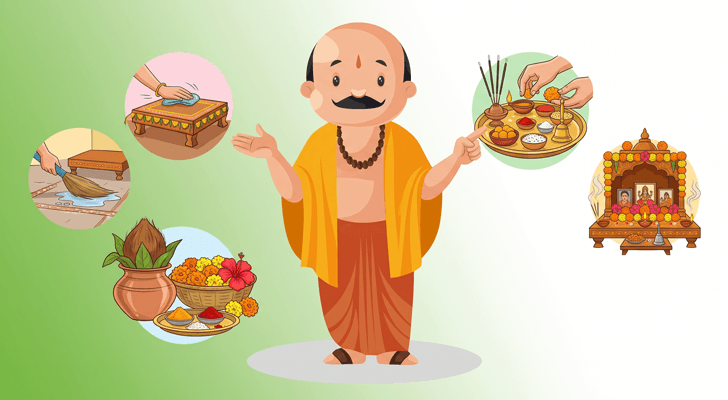
Good preparation lets the family sit down to Satyanarayan Puja calmly, with everything at hand and the mind on the worship rather than on last-minute errands. This page sets out what to arrange in the days before, the day before and on the day itself, up to the moment the puja begins. For the ritual steps once you are seated, see the Satyanarayan Puja vidhi, and for the overall order of the puja, see the procedure of Satyanarayan Puja.
A few days before
- Fix the date and time: Many families choose Purnima (the full moon day), Ekadashi, Sankranti or a family occasion such as griha pravesh, a wedding or a birthday. Evening is a common time, but choose what suits the household. See when to perform Satyanarayan Puja.
- Book a priest, if you want one: Confirm the time and ask whether he will bring any items himself, such as the katha book, havan materials or navagraha items.
- Invite family and friends: Satyanarayan Puja is traditionally shared, and the katha encourages inviting relatives and neighbours to receive the prasad.
- Make a list of items: Use the Satyanarayan Puja items list and buy the non-perishable things early: roli, kumkum, haldi, sandal paste, incense, camphor, cotton wicks, ghee, betel nuts, mauli thread, rice and the katha book.
- Plan the prasad: Decide whether you will make sheera (sooji halwa) or wheat flour panjiri, and buy the semolina or flour, sugar, ghee, cardamom and dry fruit; milk and bananas can be bought fresh. The main ingredients are traditionally taken in sava (one and a quarter) measures, as explained on the Satyanarayan Puja prasad preparation page.
The day before
- Clean the house: Clean the whole home, and especially the room where the puja will be held. Wash the floor of the puja area.
- Wash the puja vessels: Clean the kalash, plates (thali), bowls, spoons, lamp and bell so they are dry and ready.
- Buy fresh items: Flowers, garlands, tulsi leaves, durva grass, mango leaves, betel leaves, bananas, other fruits and banana plants or leaves for the mandap are best bought the day before or early on the day so they stay fresh.
- Decorate the entrance: Many families tie a toran of mango leaves over the main door and draw rangoli at the threshold.
- Plan the space: Decide where the chowki will stand, ideally so that the person performing the puja faces east or north. Leave room for the family to sit and for guests during the katha and aarti.
- Arrange clothes: Keep clean, preferably traditional clothes ready for the day of the puja.
On the day
Personal preparation
Wake early, bathe and put on clean clothes. Many devotees keep a fast until the puja is complete, either taking nothing or only fruit, milk and water. Fasting is a personal choice; elderly people, children, pregnant women and anyone who is unwell need not fast. Keep the mind calm and avoid quarrels and harsh words on the day, since truthfulness is the heart of the vrat.
Setting up the altar
- Draw a small rangoli where the chowki will stand, or simply sprinkle the spot with water.
- Place the wooden chowki and cover it with a clean red or yellow cloth.
- Tie banana plants or banana leaves at the corners of the chowki to form a small mandap, and decorate it with flowers or mango leaves.
- Place the picture or idol of Lord Satyanarayan in the centre, with Goddess Lakshmi if you have her picture, and put a garland on it.
- Make a small heap of rice on one side and place the kalash on it. Fill the kalash about three-quarters with clean water, adding a few drops of Ganga jal if you have it, and drop in a coin, a betel nut, some rice and a flower.
- Arrange five mango leaves in the mouth of the kalash and set a coconut on top, wrapped in a red cloth or tied with mauli thread. Apply kumkum and haldi to the kalash.
- Place a betel nut on a betel leaf to represent Lord Ganesh. In many homes, nine small heaps of rice or nine betel nuts are also arranged for the navagraha.
- Set the ghee lamp, incense holder, bell and conch (if used) within easy reach.
Preparing the offerings
- Make the prasad fresh on the day, after bathing, in a clean kitchen. Keep it covered until it is offered, and do not taste it before it is offered.
- Prepare panchamrit by mixing milk, curd, ghee, honey and sugar in a clean bowl, and add a few tulsi leaves.
- Wash the fruits and arrange them on a plate. Bananas are traditionally included.
- Pick and wash tulsi leaves, and keep them in a small bowl.
- Arrange a puja thali with roli, kumkum, haldi, sandal paste, rice, flowers, betel leaves and nuts, camphor, cotton wicks and a little money for dakshina.
- Keep a small vessel of clean water and a spoon for achaman and other offerings.
Just before starting
Lay out the asans (mats) for the person or couple performing the puja. A married couple sits side by side; in many families the wife sits on her husband's left, though customs differ. Keep the katha book and the aarti text open at hand. Switch phones to silent, and ask everyone who is joining to stay until the aarti and prasad, since leaving midway is traditionally avoided. Light the lamp only when you are seated and ready to begin.
Common questions
Can the prasad be made the day before?
It is generally made fresh on the day of the puja. If time is short, the dry ingredients can be measured and the dry fruit chopped the day before.
What if an item is missing?
According to tradition, devotion matters more than any single item. If something is unavailable, offer rice (akshat) or a flower in its place with a prayer.
Is a banana plant necessary?
Banana plants or leaves are traditional for the mandap, but they are not essential. A clean, decorated chowki is enough for a simple home puja.
अच्छी तैयारी हो तो परिवार सत्यनारायण पूजा के लिए शांत मन से बैठ पाता है। सारी सामग्री हाथ के पास होती है और ध्यान आखिरी समय की भाग-दौड़ के बजाय पूजा पर रहता है। इस पेज पर बताया गया है कि पूजा से कुछ दिन पहले, एक दिन पहले और पूजा वाले दिन, पूजा शुरू होने तक क्या-क्या व्यवस्था करनी है। आसन पर बैठने के बाद की विधि के लिए सत्यनारायण पूजा विधि और पूजा के पूरे क्रम के लिए सत्यनारायण पूजा की प्रक्रिया देखें।
कुछ दिन पहले
- तिथि और समय तय करें: कई परिवार पूर्णिमा, एकादशी, संक्रांति या गृह प्रवेश, विवाह, जन्मदिन जैसे पारिवारिक अवसर चुनते हैं। शाम का समय प्रचलित है, लेकिन जो समय घर के लिए सुविधाजनक हो, वही चुनें। देखें सत्यनारायण पूजा कब करें।
- पंडित जी को बुलाना हो तो पहले से तय करें: समय पक्का करें और पूछ लें कि क्या वे कथा की पुस्तक, हवन सामग्री या नवग्रह की सामग्री जैसी कोई चीज़ स्वयं लाएंगे।
- परिवार और मित्रों को आमंत्रित करें: सत्यनारायण पूजा परंपरा से मिल-जुलकर की जाती है, और कथा में भी रिश्तेदारों और पड़ोसियों को प्रसाद के लिए बुलाने की बात कही गई है।
- सामग्री की सूची बनाएं: सत्यनारायण पूजा सामग्री सूची देखें और जल्दी खराब न होने वाली चीज़ें पहले ही खरीद लें: रोली, कुमकुम, हल्दी, चंदन, अगरबत्ती, कपूर, रुई की बत्तियां, घी, सुपारी, मौली, चावल और कथा की पुस्तक।
- प्रसाद की योजना बनाएं: तय करें कि आप शीरा (सूजी का हलवा) बनाएंगे या आटे की पंजीरी, और सूजी या आटा, चीनी, घी, इलायची और सूखे मेवे ले आएं; दूध और केले ताज़े खरीदे जा सकते हैं। परंपरा से मुख्य सामग्री सवा (एक और चौथाई) माप में ली जाती है, जैसा कि सत्यनारायण पूजा प्रसाद बनाने की विधि पेज पर बताया गया है।
एक दिन पहले
- घर की सफाई: पूरे घर की, और खास तौर पर उस कमरे की जहां पूजा होगी, अच्छी तरह सफाई करें। पूजा स्थान का फर्श धो लें।
- पूजा के बर्तन धोएं: कलश, थाली, कटोरियां, चम्मच, दीपक और घंटी साफ करके सुखा लें।
- ताज़ी सामग्री लाएं: फूल, माला, तुलसी, दूर्वा, आम के पत्ते, पान के पत्ते, केले, अन्य फल और मंडप के लिए केले के पौधे या पत्ते एक दिन पहले या पूजा वाले दिन सुबह लाना अच्छा रहता है, ताकि वे ताज़े रहें।
- मुख्य द्वार सजाएं: कई परिवार मुख्य दरवाज़े पर आम के पत्तों का तोरण बांधते हैं और देहरी पर रंगोली बनाते हैं।
- जगह की योजना बनाएं: तय करें कि चौकी कहां रखी जाएगी, ताकि पूजा करने वाले का मुख यथासंभव पूर्व या उत्तर की ओर रहे। कथा और आरती के समय परिवार और मेहमानों के बैठने की जगह भी छोड़ें।
- कपड़े तैयार रखें: पूजा के दिन के लिए साफ, हो सके तो पारंपरिक कपड़े निकालकर रख लें।
पूजा वाले दिन
स्वयं की तैयारी
सुबह जल्दी उठें, स्नान करें और साफ कपड़े पहनें। कई भक्त पूजा पूरी होने तक व्रत रखते हैं, या तो कुछ नहीं लेते या केवल फल, दूध और पानी लेते हैं। व्रत रखना व्यक्तिगत निर्णय है; बुजुर्गों, बच्चों, गर्भवती महिलाओं और अस्वस्थ लोगों को व्रत रखने की आवश्यकता नहीं है। इस दिन मन शांत रखें और झगड़े व कठोर शब्दों से बचें, क्योंकि सत्य ही इस व्रत का मूल है।
वेदी सजाना
- जहां चौकी रखनी है वहां छोटी रंगोली बनाएं, या बस उस जगह पर जल छिड़क दें।
- लकड़ी की चौकी रखें और उस पर साफ लाल या पीला कपड़ा बिछाएं।
- चौकी के कोनों पर केले के पौधे या पत्ते बांधकर छोटा मंडप बनाएं और फूलों या आम के पत्तों से सजाएं।
- बीच में भगवान सत्यनारायण की तस्वीर या मूर्ति रखें, माता लक्ष्मी की तस्वीर हो तो वह भी रखें, और माला पहनाएं।
- एक ओर चावल की छोटी ढेरी बनाकर उस पर कलश रखें। कलश को लगभग तीन-चौथाई साफ पानी से भरें, गंगाजल हो तो कुछ बूंदें मिला दें, और उसमें एक सिक्का, एक सुपारी, थोड़े चावल और एक फूल डालें।
- कलश के मुंह पर आम के पांच पत्ते लगाएं और ऊपर लाल कपड़े में लिपटा या मौली बंधा नारियल रखें। कलश पर कुमकुम और हल्दी लगाएं।
- भगवान गणेश के प्रतीक के रूप में पान के पत्ते पर एक सुपारी रखें। कई घरों में नवग्रह के लिए चावल की नौ छोटी ढेरियां या नौ सुपारियां भी रखी जाती हैं।
- घी का दीपक, अगरबत्ती स्टैंड, घंटी और शंख (यदि उपयोग करते हों) पास में रखें।
अर्पण की सामग्री तैयार करना
- प्रसाद पूजा वाले दिन ही, स्नान के बाद, साफ रसोई में ताज़ा बनाएं। भोग लगने तक उसे ढककर रखें और भोग से पहले न चखें।
- एक साफ कटोरी में दूध, दही, घी, शहद और चीनी मिलाकर पंचामृत बनाएं और उसमें कुछ तुलसी के पत्ते डालें।
- फल धोकर एक थाली में सजाएं। परंपरा से इसमें केला ज़रूर रखा जाता है।
- तुलसी के पत्ते तोड़कर धो लें और एक छोटी कटोरी में रखें।
- पूजा की थाली में रोली, कुमकुम, हल्दी, चंदन, अक्षत, फूल, पान-सुपारी, कपूर, रुई की बत्तियां और दक्षिणा के लिए कुछ पैसे रखें।
- आचमन और अन्य अर्पण के लिए साफ जल का एक छोटा पात्र और चम्मच रखें।
पूजा शुरू करने से ठीक पहले
पूजा करने वाले व्यक्ति या दंपती के लिए आसन बिछाएं। विवाहित दंपती साथ-साथ बैठते हैं; कई परिवारों में पत्नी पति के बाईं ओर बैठती है, हालांकि यह रीति हर जगह एक जैसी नहीं है। कथा की पुस्तक और आरती का पाठ खोलकर पास रखें। फोन साइलेंट कर दें और शामिल होने वाले सभी लोगों से कहें कि आरती और प्रसाद तक रुकें, क्योंकि परंपरा में पूजा बीच में छोड़कर जाना उचित नहीं माना जाता। दीपक तभी जलाएं जब आप आसन पर बैठकर पूजा शुरू करने के लिए तैयार हों।
सामान्य प्रश्न
क्या प्रसाद एक दिन पहले बनाया जा सकता है?
आमतौर पर प्रसाद पूजा वाले दिन ही ताज़ा बनाया जाता है। समय कम हो तो सूखी सामग्री एक दिन पहले नाप कर रख सकते हैं और मेवे काट सकते हैं।
अगर कोई सामग्री न मिले तो क्या करें?
परंपरा के अनुसार किसी एक वस्तु से अधिक महत्व भक्ति का है। कोई चीज़ उपलब्ध न हो तो प्रार्थना के साथ उसकी जगह अक्षत या फूल अर्पित कर दें।
क्या केले का पौधा ज़रूरी है?
मंडप के लिए केले के पौधे या पत्ते पारंपरिक हैं, लेकिन अनिवार्य नहीं। साधारण घरेलू पूजा के लिए साफ और सजी हुई चौकी पर्याप्त है।