

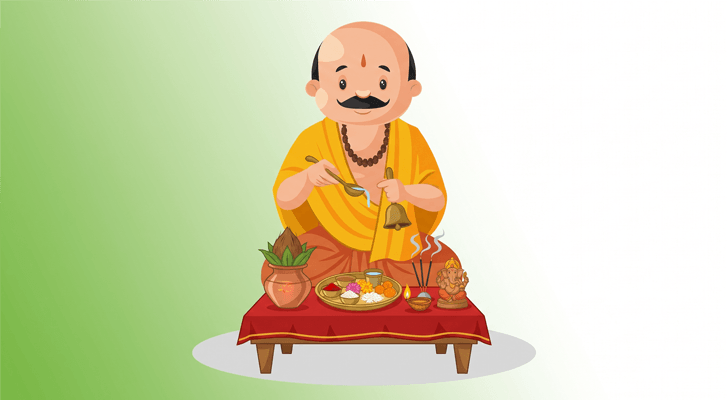
Satyanarayan Puja vidhi is the step-by-step method of worshipping Lord Satyanarayan, the benevolent form of Lord Vishnu known as "Narayan who is truth". This page walks through each ritual step in detail, with simple mantras that any devotee can say. If you would like a short overview of the order of the puja and who can perform it, read the procedure of Satyanarayan Puja. For what to arrange beforehand, see Satyanarayan Puja preparation.
Customs differ between regions and families, and many households invite a priest who follows his own tradition. The steps below describe the common form of the home puja. Where you are unsure, faith and sincerity matter more than perfect pronunciation.
Before you begin
Take a bath, wear clean clothes and sit facing east or north on a clean asan (mat) in front of the decorated chowki. The picture or idol of Lord Satyanarayan, the kalash, the lamp, flowers, tulsi leaves, panchamrit, fruits and the prasad should already be in place. Many devotees keep a fast until the puja is complete, but this is optional for anyone who cannot fast, such as elderly people, children, pregnant women or those who are unwell.
Opening rituals
- Achaman (purification): Take a little water in the right palm and sip it three times, saying "Om Keshavaya Namah", "Om Narayanaya Namah" and "Om Madhavaya Namah". Then wash the hands with a little water.
- Lighting the lamp: Light the ghee lamp (diya) and incense. Bow to the lamp as a witness to the worship.
- Sankalp (resolve): Hold a little water, rice (akshat) and a flower in the right hand. State your name, your gotra (family lineage, if you know it), the date and place, and the purpose of the puja, for example: "I am performing the Satyanarayan vrat and puja for the wellbeing and peace of my family." Then let the water, rice and flower fall onto a plate.
- Ganesh puja: Lord Ganesh is worshipped first so that the puja proceeds without obstacles. Offer kumkum, rice, flowers, durva grass and a sweet to a betel nut or small idol representing Ganesh, saying "Om Gam Ganapataye Namah".
- Kalash puja: The kalash (water pot topped with mango leaves and a coconut) represents the sacred waters and the presence of the deities. Apply kumkum and haldi, offer rice and flowers, and say "Om Varunaya Namah".
- Navagraha puja: In many homes the nine planetary deities are honoured next, usually on nine small heaps of rice or nine betel nuts. Offer rice, flowers and kumkum, saying "Om Navagrahebhyo Namah".
Worship of Lord Satyanarayan
This is the heart of the vidhi. The offerings below follow the traditional pattern of upachara (acts of service). Families who follow the shorter panchopachara offer only five: sandal paste, flowers, incense, lamp and food. The fuller shodashopachara has sixteen steps, and the list below covers the most common ones.
- Dhyana (meditation): Fold your hands and picture the Lord: four-armed, holding the conch, discus, mace and lotus, with Goddess Lakshmi beside him. Say "Om Shri Satyanarayanaya Namah, dhyanam samarpayami".
- Avahana (invitation): Offer a flower to the picture or idol and invite the Lord to be present: "Om Shri Satyanarayanaya Namah, avahayami".
- Asana (seat): Offer rice or a flower as a seat for the Lord.
- Padya and arghya: Offer a few drops of water for the feet and for the hands, using a spoon or a flower.
- Snana (bathing): If you are using an idol or a shaligram, bathe it with panchamrit (milk, curd, ghee, honey and sugar) and then with clean water. If you are using a picture, sprinkle a few drops with a flower or tulsi leaf.
- Vastra (clothing): Offer a piece of cloth, a janeu (sacred thread) or mauli.
- Gandha (sandal paste): Apply chandan, kumkum and haldi to the idol or the picture frame.
- Akshat and pushpa: Offer unbroken rice, flowers and a garland. Tulsi leaves are especially dear to Lord Vishnu and are offered generously.
- Dhoop and deep: Wave incense and the lamp before the Lord.
- Naivedya (food offering): Place the prasad (sheera or panjiri), panchamrit, fruits and bananas before the Lord, with a tulsi leaf on each. Sprinkle a little water around the plate and say "Om Shri Satyanarayanaya Namah, naivedyam samarpayami".
- Tambula and dakshina: Offer betel leaves, a betel nut and a coin or some money as dakshina.
Goddess Lakshmi is honoured with the Lord. Offer kumkum, flowers and rice, saying "Om Mahalakshmyai Namah". While making the offerings, you may also repeat "Om Namo Bhagavate Vasudevaya" as many times as you wish.
Reading the katha
After the offerings, the family sits together to read or listen to the Satyanarayan Katha. It has five chapters, traditionally attributed to the Reva Khanda of the Skanda Purana, and tells of the poor Brahmin of Kashi, the woodcutter, King Ulkamukh, the merchant Sadhu and his daughter Kalavati, and King Tungadhvaj. Many families keep a little rice or a flower in their hands during the reading and offer it at the end of each chapter. Some ring a bell or blow the conch between chapters.
Closing rituals
- Aarti: Light camphor or a fresh lamp and sing the Satyanarayan aarti, "Om Jai Lakshmi Ramana". Everyone present stands and joins in, and the aarti flame is then offered to all.
- Pushpanjali and pradakshina: Offer a handful of flowers with folded hands. Turn around in place (or walk around the altar if there is room) as a mark of reverence.
- Havan (optional): Some families perform a small havan after the aarti, offering ghee and havan samagri into the fire while saying "Om Shri Satyanarayanaya Swaha".
- Kshama prarthana (prayer for forgiveness): With folded hands, ask the Lord to forgive any mistakes made knowingly or unknowingly during the puja.
- Prasad: The prasad is shared with everyone present and then sent to neighbours and anyone who could not attend. Those who were fasting break their fast with the prasad.
Things to keep in mind
- Respect the prasad. The katha itself stresses that prasad offered to Satyanarayan should never be refused or ignored.
- Keep the vow you made in the sankalp. Truthfulness and keeping one's word are the central message of the vrat.
- If you do not know Sanskrit, you may say the mantras slowly or simply pray in your own language. According to tradition, devotion is what matters most.
- Do not throw away the leftover flowers and tulsi carelessly. Many families place them under a tree or immerse them in flowing water.
सत्यनारायण पूजा विधि भगवान सत्यनारायण की पूजा का क्रमवार तरीका है। भगवान सत्यनारायण भगवान विष्णु का कृपालु रूप हैं, जिनके नाम का अर्थ है "सत्य स्वरूप नारायण"। इस पेज पर पूजा के हर चरण को विस्तार से, सरल मंत्रों के साथ बताया गया है, जिन्हें कोई भी भक्त बोल सकता है। अगर आप पूजा के क्रम और इसे कौन कर सकता है, इसकी संक्षिप्त जानकारी चाहते हैं तो सत्यनारायण पूजा की प्रक्रिया पढ़ें। पहले से क्या तैयारी करनी है, यह जानने के लिए सत्यनारायण पूजा की तैयारी देखें।
अलग-अलग क्षेत्रों और परिवारों में रीति-रिवाज थोड़े अलग होते हैं, और कई घरों में पंडित जी अपनी परंपरा के अनुसार पूजा कराते हैं। नीचे घर पर की जाने वाली पूजा का सामान्य रूप दिया गया है। जहां संदेह हो, वहां याद रखें कि सही उच्चारण से अधिक महत्व श्रद्धा और सच्चे मन का है।
पूजा शुरू करने से पहले
स्नान करके साफ कपड़े पहनें और सजी हुई चौकी के सामने पूर्व या उत्तर की ओर मुख करके साफ आसन पर बैठें। भगवान सत्यनारायण की तस्वीर या मूर्ति, कलश, दीपक, फूल, तुलसी के पत्ते, पंचामृत, फल और प्रसाद पहले से अपनी जगह पर रखे होने चाहिए। कई भक्त पूजा पूरी होने तक व्रत रखते हैं, लेकिन जो लोग व्रत नहीं रख सकते, जैसे बुजुर्ग, बच्चे, गर्भवती महिलाएं या अस्वस्थ लोग, उनके लिए यह अनिवार्य नहीं है।
आरंभ की विधि
- आचमन (शुद्धि): दाहिनी हथेली में थोड़ा जल लेकर तीन बार पिएं और बोलें "ॐ केशवाय नमः", "ॐ नारायणाय नमः", "ॐ माधवाय नमः"। फिर थोड़े जल से हाथ धो लें।
- दीप प्रज्वलन: घी का दीपक और धूप-अगरबत्ती जलाएं। दीपक को पूजा का साक्षी मानकर प्रणाम करें।
- संकल्प: दाहिने हाथ में थोड़ा जल, अक्षत और एक फूल लें। अपना नाम, गोत्र (यदि पता हो), तिथि, स्थान और पूजा का उद्देश्य बोलें, जैसे: "मैं अपने परिवार के सुख और शांति के लिए सत्यनारायण व्रत और पूजा कर रहा/रही हूं।" फिर जल, अक्षत और फूल को एक थाली में छोड़ दें।
- गणेश पूजा: पूजा बिना विघ्न के पूरी हो, इसलिए सबसे पहले भगवान गणेश की पूजा होती है। गणेश जी के प्रतीक के रूप में सुपारी या छोटी मूर्ति पर कुमकुम, अक्षत, फूल, दूर्वा और मिठाई चढ़ाएं और बोलें "ॐ गं गणपतये नमः"।
- कलश पूजा: आम के पत्तों और नारियल से सजा जल का कलश पवित्र जल और देवताओं की उपस्थिति का प्रतीक है। उस पर कुमकुम और हल्दी लगाएं, अक्षत और फूल चढ़ाएं और बोलें "ॐ वरुणाय नमः"।
- नवग्रह पूजा: कई घरों में इसके बाद नौ ग्रहों की पूजा होती है, आमतौर पर चावल की नौ छोटी ढेरियों या नौ सुपारियों पर। अक्षत, फूल और कुमकुम चढ़ाते हुए बोलें "ॐ नवग्रहेभ्यो नमः"।
भगवान सत्यनारायण की पूजा
यह विधि का मुख्य भाग है। नीचे दिए गए अर्पण उपचार (सेवा) की पारंपरिक पद्धति के अनुसार हैं। जो परिवार संक्षिप्त पंचोपचार पूजा करते हैं, वे केवल पांच चीज़ें अर्पित करते हैं: चंदन, फूल, धूप, दीप और नैवेद्य। पूर्ण षोडशोपचार पूजा में सोलह चरण होते हैं, और नीचे उनमें से सबसे प्रचलित चरण दिए गए हैं।
- ध्यान: हाथ जोड़कर भगवान का ध्यान करें: चार भुजाओं वाले, शंख, चक्र, गदा और पद्म धारण किए हुए, साथ में माता लक्ष्मी। बोलें "ॐ श्री सत्यनारायणाय नमः, ध्यानं समर्पयामि"।
- आवाहन: तस्वीर या मूर्ति पर फूल चढ़ाकर भगवान को पधारने का निमंत्रण दें: "ॐ श्री सत्यनारायणाय नमः, आवाहयामि"।
- आसन: भगवान के आसन के रूप में अक्षत या फूल अर्पित करें।
- पाद्य और अर्घ्य: चम्मच या फूल से भगवान के चरणों और हाथों के लिए थोड़ा जल अर्पित करें।
- स्नान: यदि मूर्ति या शालिग्राम है तो उसे पंचामृत (दूध, दही, घी, शहद और चीनी) से और फिर शुद्ध जल से स्नान कराएं। तस्वीर हो तो फूल या तुलसी के पत्ते से कुछ बूंदें छिड़क दें।
- वस्त्र: कपड़े का एक टुकड़ा, जनेऊ या मौली (कलावा) अर्पित करें।
- गंध: मूर्ति या तस्वीर के फ्रेम पर चंदन, कुमकुम और हल्दी लगाएं।
- अक्षत और पुष्प: अक्षत, फूल और माला अर्पित करें। तुलसी भगवान विष्णु को विशेष रूप से प्रिय है, इसलिए तुलसी के पत्ते भरपूर चढ़ाएं।
- धूप और दीप: भगवान के सामने धूप और दीपक घुमाएं।
- नैवेद्य: प्रसाद (शीरा या पंजीरी), पंचामृत, फल और केला भगवान के सामने रखें और हर एक पर तुलसी का पत्ता रखें। थाली के चारों ओर थोड़ा जल छिड़कें और बोलें "ॐ श्री सत्यनारायणाय नमः, नैवेद्यं समर्पयामि"।
- तांबूल और दक्षिणा: पान के पत्ते, सुपारी और दक्षिणा के रूप में सिक्का या कुछ धन अर्पित करें।
भगवान के साथ माता लक्ष्मी की भी पूजा की जाती है। कुमकुम, फूल और अक्षत चढ़ाते हुए बोलें "ॐ महालक्ष्म्यै नमः"। अर्पण करते समय आप अपनी इच्छा अनुसार "ॐ नमो भगवते वासुदेवाय" का जप भी कर सकते हैं।
कथा पाठ
अर्पण के बाद पूरा परिवार साथ बैठकर सत्यनारायण कथा पढ़ता या सुनता है। कथा में पांच अध्याय हैं, जिन्हें परंपरा से स्कंद पुराण के रेवा खंड का भाग माना जाता है। इसमें काशी के गरीब ब्राह्मण, लकड़हारे, राजा उल्कामुख, साधु वणिक और उसकी पुत्री कलावती, और राजा तुंगध्वज की कथाएं हैं। कई परिवार कथा सुनते समय हाथ में थोड़े अक्षत या फूल रखते हैं और हर अध्याय के अंत में उन्हें अर्पित करते हैं। कुछ लोग अध्यायों के बीच घंटी बजाते या शंख बजाते हैं।
समापन की विधि
- आरती: कपूर या नया दीपक जलाकर सत्यनारायण जी की आरती "ॐ जय लक्ष्मी रमणा" गाएं। सभी लोग खड़े होकर आरती में शामिल होते हैं, और फिर आरती की ज्योति सबको दी जाती है।
- पुष्पांजलि और प्रदक्षिणा: हाथ जोड़कर अंजलि भर फूल अर्पित करें। श्रद्धा के रूप में अपनी जगह पर घूमकर (या जगह हो तो वेदी के चारों ओर) प्रदक्षिणा करें।
- हवन (वैकल्पिक): कुछ परिवार आरती के बाद छोटा हवन करते हैं, जिसमें "ॐ श्री सत्यनारायणाय स्वाहा" बोलते हुए अग्नि में घी और हवन सामग्री की आहुति दी जाती है।
- क्षमा प्रार्थना: हाथ जोड़कर भगवान से पूजा में जाने-अनजाने हुई भूलों के लिए क्षमा मांगें।
- प्रसाद: प्रसाद पहले सभी उपस्थित लोगों में बांटा जाता है, फिर पड़ोसियों और उन लोगों तक भी पहुंचाया जाता है जो पूजा में नहीं आ सके। जिन्होंने व्रत रखा हो, वे प्रसाद से ही व्रत खोलते हैं।
ध्यान रखने योग्य बातें
- प्रसाद का सम्मान करें। स्वयं कथा में बताया गया है कि सत्यनारायण भगवान को चढ़ाए गए प्रसाद को कभी ठुकराना या अनदेखा नहीं करना चाहिए।
- संकल्प में लिया गया वचन निभाएं। सत्य बोलना और अपना वचन पूरा करना ही इस व्रत का मुख्य संदेश है।
- अगर आप संस्कृत नहीं जानते तो मंत्र धीरे-धीरे बोलें या अपनी भाषा में प्रार्थना करें। परंपरा के अनुसार सबसे बड़ी बात भक्ति है।
- बचे हुए फूल और तुलसी के पत्ते लापरवाही से न फेंकें। कई परिवार इन्हें किसी पेड़ के नीचे रख देते हैं या बहते जल में प्रवाहित करते हैं।